
NITN | @notintownlive | 24 Sep 2021, 07:49 am
 Sridhar Vembu
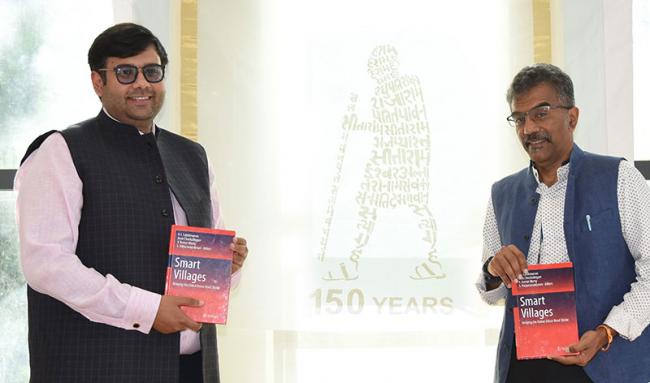
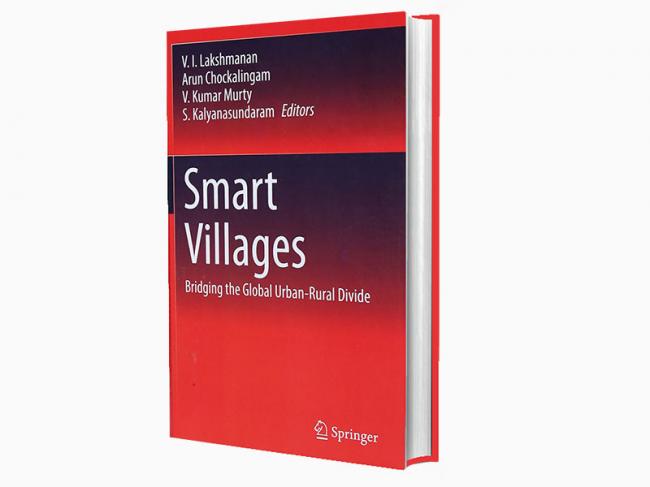
New Delhi: A new book that puts together case studies on uplifting villages, titled ‘Smart Villages: Bridging the Global Urban-Rural Divide” by Springer Nature Switzerland AG was launched late Wednesday by Zoho founder Dr Sridhar Vembu, who has inspirationally gone back to a village to lead his company’s $610 million software operations.
The book launch event was organized by the Sona Valliappa group, whose vice chairman Chocko Valliappa along with Nirmalesh Sampath Kumar, Director, Innovation & R&D at the Sona Group have contributed two chapters on the group’s work in the villages around Salem.
The event was timed to coincide with the day Mahatma Gandhi renounced the dhoti and shirt in favour of the loin cloth, since it happened at the premises of the Sona Group founder.
Speaking at the launch event, the main author of the book, Dr V I Lakshmanan, Professor, University of Toronto, Canada described how Gandhi's ideas on the village economy were inspirational as were former President Abdul Kalam’s PURA (Providing Urban Amenities to Rural Areas) initiatives.
He also said how it was heartening to see Dr Sridhar Vembu taking the bold step of reverse migration to a village, thereby being the most apt person to launch the book.
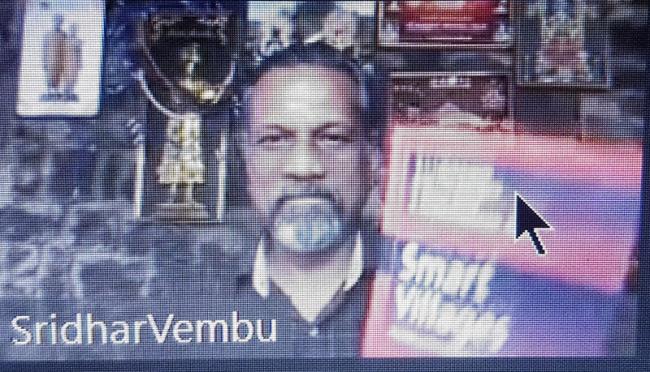
Dr Vembu too talked about drawing inspiration from Dr Kalam’s ideas and how he shifted to Tenkasi even before the pandemic.
He said that if in a few villages, one could showcase how through skilling, technology and infrastructure, one could run an enterprise, the model could be replicated in other areas.
Chocko Valliappa said that the Sona College of Technology, run by Sona Valliappa Group, founded by Kalaithanthai Karumuttu Thiagarajan Chettiar, a textile magnate, has a Gandhi connect.
The latter gave up wearing shirts and dhoti and switched to the loin cloth in the temple town of Madurai on September 22, 1921, in none other than Chettiar’s house. It may be pointed out that the Sona Group’s foray into education was also an outcome of the magnate’s meeting with the Mahatma.
The role of women’s empowerment in uplifting the rural economy also was a focal point of discussion at the event.
Kuppulakshmi Krishnamoorthy, global head, Zoho for Startups, shared her own inspiring story of growing up in a tier-3 city like Salem and charting a career path in a global corporation.
“I joined Zoho in 2010, where one of the many important things talked about in smart villages - right infrastructure, knowledge, and accountability – are all part of the organization culture," she said.
"I keep going back to this word called accountability in all its depth, in all its power that the word wields,” she said, describing how Dr Vembu asked each employee to look inwards about their purpose and aim in life.
She stressed how important it was for women to “show up”.
Describing how she herself was a caregiver, and could understand the challenges faced by women to balance a career with other responsibilities, she said one needed to be empathetic leaders to understand what women are going through every day.
In their paper Chocko Valliappa and Nimalesh K. Sampath Kumar have emphasized the need for addressing the specific needs of the differently abled through technological intervention.
For such women, the odds are even more heavily stacked.
They need empowerment through special training to become independent and armed with the appropriate skills to get jobs.
Besides, farmers have to cope with the vagaries of fluctuating prices. Tomatoes may be priced at Rs 50 a kilo one day, then plummet to Rs 15 the next week.
Cold storage facilities are few and far between. Farmers are compelled to dump their produce at throwaway prices.
A beginning has been made by the Sona College of Technology at the Women’s Technology Park (WTP), Salem in Tamil Nadu, where it is running five projects, sponsored by the Department of Science & Technology.
Fringed by hills, Salem is witness to a quiet revolution, thanks to WTP, by training nearly 800 women, successfully turning village women into entrepreneurs, through sustainable schemes.
Among a host of striking innovations is a solar power dryer, which helps dehydrate vegetables like tomatoes, lemon rinds, spinach, bananas, drumsticks etc, all within a matter of hours.
The idea is to help rural women to set up cottage industries close to farms to help process vegetables and fruits and prevent them from rotting.
There is further value addition up the food chain, creating candies from dried products or simply powder for use in soups.
There is a tile-making unit, for fashioning concrete slabs for using industrial waste in pavements.
Tiles in different hues and in various geometric designs are fabricated by mixing concrete with steel slag (collected from a local steel plant) and poured into moulds.
Sone College’s civil engineering department has developed the technology and the mix for these super absorbent tiles creating circular economies and waste to wealth solutions.
- Sona College of Technology's 25th graduation day: 1,325 students receive BE, BTech, ME, MCA, MBA and PhD degrees
- ‘We are the worst storytellers’: Suhel Seth on India’s failure to market itself at 'Kitaab' book launch
- Sona College of Technology welcomes 2,400 freshers to UG, PG programmes
- ‘Children shouldn’t carry the burden’: Social activist Sundeep Bhutoria urges Centre to enforce 10% school bag rule
- When the Body Becomes a Temple: The Ramnami Samaj's Century-Old Rebellion Now Inspires Kolkata's Durga Puja
- From Ramnami tattoos to a global app: Chaltabagan's 'Nishan' takes Durga Puja beyond Kolkata
- 66th Graduation Day: Thiagarajar Polytechnic records 100% placement for graduating batch of 692 across 11 disciplines
- 66th Graduation Day: Thiagarajar Polytechnic records 100% placement for graduating batch of 692 across 11 disciplines
- Three outstanding PhD scholars to receive Rs 1 lakh a year for three years from Valliappa Foundation
- Chaltabagan Durga Puja 2026: Khuti Puja marks new beginning amid Bengal’s political change


Aviation major Emirates is taking its award-winning Premium Economy experience a step further with the launch of what it describes as the world’s first electrically powered Premium Economy seat, featuring a full-height adjustable privacy screen between every seat.

Air India and Drukair, Royal Bhutan Airlines, have entered into an interline partnership to enhance travel convenience and strengthen network connectivity between India, Bhutan, and destinations beyond.
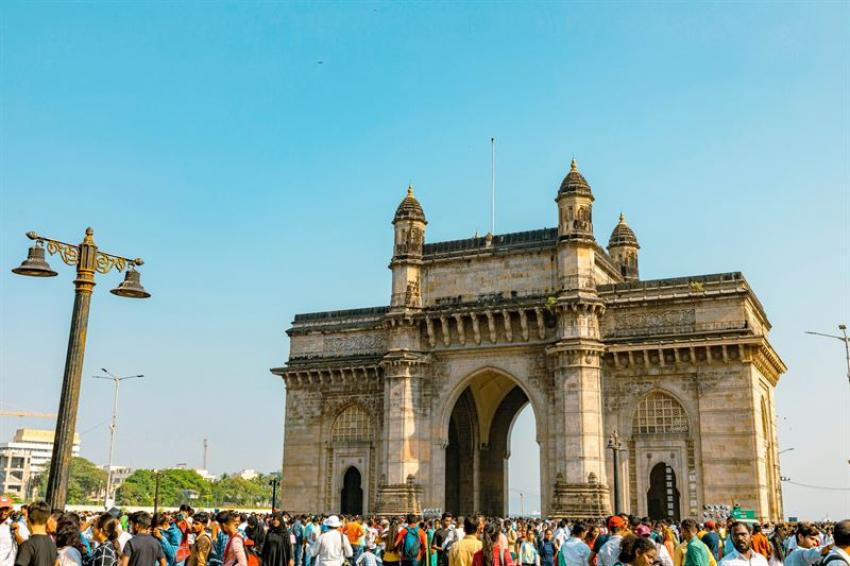
SAS will resume nonstop flights between Scandinavia and India from October 1, 2026, with a year-round service connecting Copenhagen and Mumbai. The route will operate five times a week using an Airbus A330, marking SAS' return to India after a 17-year gap.