
NITN | @notintownlive | 09 Mar 2024, 05:22 am
 Robotic Surgery
Robotic surgery with its advantage of minimal invasion of the body, less blood loss translates to quicker patient recovery and better cosmesis has significant relevance to women in general and Indian women in particular.
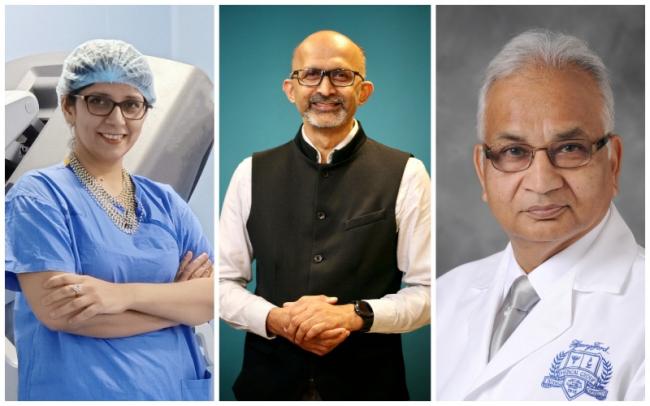
“A woman is the core foundation of an Indian family and when she is taken ill it completely disrupts the life of each member of the family. Robotic surgery has facilitated them to return to normal function even after major surgical undertakings,” says Dr Mahendra Bhandari, CEO, Vattikuti Foundation that has been championing Robotic Surgery in India through its capacity building programs.
Even though in the list of the advantages of robotic surgery, cosmesis falls low in the list. However, in the Indian context it is very significant particularly so for young unmarried girls, where surgical scars are being considered as a stigma.
Pioneer surgeon Dr Sandeep Nayak’s pioneering robotic surgical techniques to perform thyroid and lymph nodes surgery through almost invisible healed scars are very popular with young women conscious of their body image, adds Dr Bhandari.
Dr Nayak’s innovative robotic surgery procedure was adjudged among the best 3 entries at the KS International Innovation Awards 2023 out of 140 entries from over a dozen countries.
Today India has a large workforce of women robotic surgeons in different specialties performing robotic surgery with excellent patient outcomes. Since Robotic surgery helps women recover faster from women’s diseases gynaecologists see significant rise in its adoption.
Endometriosis, affecting 20 percent of women worldwide, is a chronic inflammatory condition requiring complex surgical interventions.
“Robotic surgery presents advantages such as enhanced precision, safety, and faster recovery. Uterine, cervical, and early ovarian cancers too can now be treated robotically with minimal incisions, ensuring a pain-free recovery and positive outcomes for patients,” says Dr Anshumala Shukla Kulkarni, Head - Minimally invasive Gynaecology, Laparoscopic & Robotic surgeon, Kokilaben Dhirubhai Ambani Hospital (KDAH), Mumbai.
One of the primary reasons for the low adoption of robotic surgery is the lack of awareness among patients. A survey among patients visiting gynaecology department at KDAH found that over 50 per cent of patients were unaware of the benefits offered by robotic surgery technology.
“Addressing this awareness gap is crucial for promoting the wider acceptance of this advanced surgical approach,” adds Dr Kulkarni, who chose to focus on robotic surgery early on in her practice as she saw a bright future for modern surgical techniques in healthcare.
Despite the growing number of women taking up robotic surgery there is a scope for improvement as the costs come down. Currently, robotic surgery costs are much higher than open surgery. In most families, the decision for whether to go in for Robotic Surgery or Open surgery is taken by men and not the women themselves.
Dr Rooma Sinha, professor of robotic gynaecology surgery, Apollo Hospitals, Hyderabad calls for a universal adoption of robotic surgery in government Medical Colleges, Trust hospitals, where women can get access to the same technology and benefits of surgery at lower costs leading to better outcomes and quick recovery.
Once that happens women will have a win-win situation for health issues like benign gynaecology, or fibroids, endometriosis or bleeding disorders. They can undergo a minimal access surgery by expert robotic surgeons and benefit from a quick recovery, less blood loss, negligible pain, and they'll be up and about on their feet in no time.
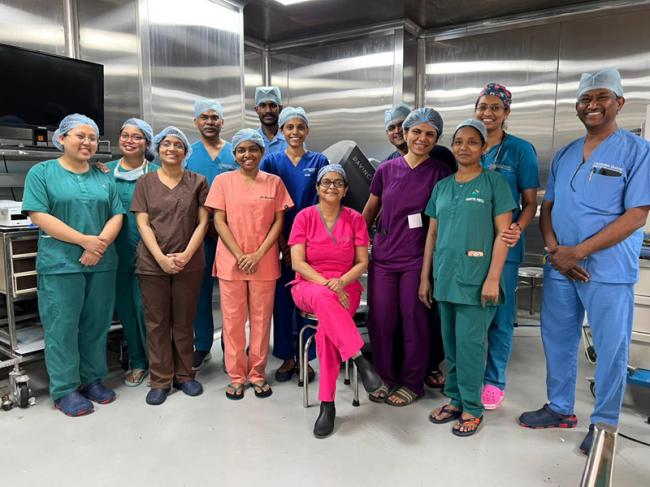
Through ‘Humans at the cutting edge of technology’ symposia, regular webinars by international faculty Vattikuti Foundation has been meeting the needs for continuous upskilling by surgeons to stay relevant and provide the best care for their patients.
Vattikuti Foundation’s one-year paid fellowship to young super specialist surgeons has been meeting the need to train surgeons under mentorship of accomplished surgeons in the latest methods of minimal access surgery.
- Manicktala Chaltabagan Lohapatty Durga Puja Committee wins numerous Awards as ‘Nishan’ theme captures hearts
- Bengal Guv R. N. Ravi inaugurates Chaltabagan Lohapatty Durga Puja’s 84th edition ‘Nishan — The Mark’
- Sundeep Bhutoria brings Bengal’s Mahalaya to the nation in Hindi – Mahishasur Mardini ki Gatha
- VeeCycle Works Signs MoU with AP Govt for Rs 150 Cr Recycling Project in Visakhapatnam
- Kolkata culturist Sundeep Bhutoria inaugurates India National Stand at Frankfurt Book Fair 2026
- Where governments stop, institutions begin: Culture Minister Shekhawat salutes Prabha Khaitan Foundation
- National Award-winning ‘Ramnami’ puts spotlight on community behind Chaltabagan’s ‘Nishan’ theme
- Thiagarajar Polytechnic College receives Education Excellence Award for the fifth time
- Sona College of Technology's 25th graduation day: 1,325 students receive BE, BTech, ME, MCA, MBA and PhD degrees
- ‘We are the worst storytellers’: Suhel Seth on India’s failure to market itself at 'Kitaab' book launch



Air India will launch non-stop flights between Delhi and Osaka’s Kansai International Airport on 2 February 2027, becoming the only airline to operate on the route. The airline will run four flights a week between the Indian capital and Osaka, Japan’s second-largest metropolitan area, using Boeing 787-8 aircraft.

IndiGo will introduce daily non-stop flights to Udaipur from Noida International Airport and Navi Mumbai International Airport, starting October 25 and November 15, 2026 respectively.
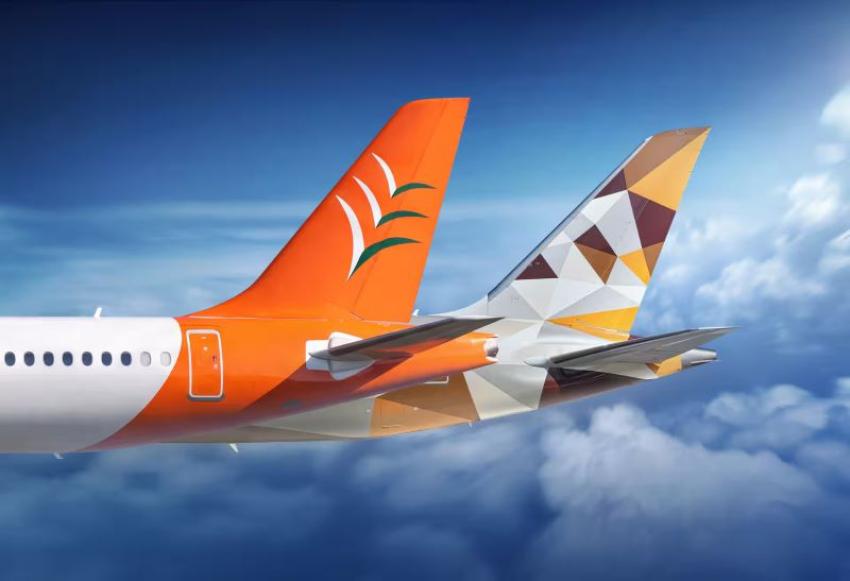
Etihad Airways and Nigerian carrier Ibom Air have signed an interline agreement that will allow passengers travelling with Etihad to connect beyond Lagos and Accra to five cities in Nigeria on a single ticket.