
25 Oct 2016, 03:30 pm
These beautiful, hand-woven saris of Bengal - depicting Indo-European social and courtly life in Murshidabad - were introduced to the Benares handloom industry in the 1950s, which lead to the evolution of a new genre of Balucharis.
Such efforts were taken further in the 1980s, consolidating a new, contemporary tradition of its making.
Now, Weavers Studio Resource Centre (WSRC) in association with Tantuja, is unveiling a series of initiatives to draw attention to the various technical, historical, and creative aspects of Balucharis, and undertaking a revival project to recreate its traditional designs and explore new directions for the future.
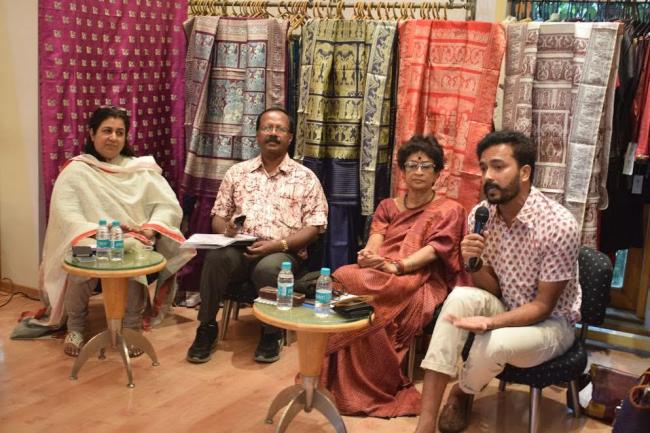
.jpg) The programme ‘Baluchari: Bengal & Beyond’ has a slew of initiatives towards contemporising this ever-glorious sari through design and ethics of craft revival, which was discussed at a Press Conference addressed by Darshan Mekani (Director, WSRC); Rabindranath Ray (MD, Tantuja); Kasturi Gupta Menon (President, Crafts Council of India) and Narayan Sinha (Artist).
The programme ‘Baluchari: Bengal & Beyond’ has a slew of initiatives towards contemporising this ever-glorious sari through design and ethics of craft revival, which was discussed at a Press Conference addressed by Darshan Mekani (Director, WSRC); Rabindranath Ray (MD, Tantuja); Kasturi Gupta Menon (President, Crafts Council of India) and Narayan Sinha (Artist).
“Baluchoris have a uniquely recognisable visual-material language, and are among the most figurative forms of hand-woven brocades in South Asia. Its historical legacy of patronage by royalty and aristocracy continues to maintain its appreciation as a rare textile art from the subcontinent,” said Darshan Mekani, Director, Weavers Studio Resource Centre.
The programme, slated to continue from Nov 18 to Dec 4, will feature an exhibition showcasing historical pieces from Tapi, WSRC, as well as institutional and private collections.
.jpg) Contemporary pieces are included from Benares and Bishnupur, as well as specially-commissioned garment interpretations by renowned Indian fashion designers.
Contemporary pieces are included from Benares and Bishnupur, as well as specially-commissioned garment interpretations by renowned Indian fashion designers.
This revival initiative has been supported by MSME and the Textile Department of the Government of West Bengal, and reproduction pieces will be showcased through Tantuja.
The exhibition will also feature the current designs and status of the Baluchari, as well as future directions for the textile in fashion, home and lifestyle, by leading Indian designers.
On Nov 19, there will be a day-long seminar with eminent historians, textile experts, GI deliberation and master craftspersons’ perspectives at the auditorium of the Birla Academy of Art and Culture.
This will be presented by Jyotindra Jain, Tulsi Vatsal, Jasleen Dhamija, Naseem Hafiz, Monisha Ahmed, Anjan Chakraverty, Ritu Sethi, Mayank Mansingh Kaul, and others. Rosemary Crill will be the moderator.
- Sona College of Technology's 25th graduation day: 1,325 students receive BE, BTech, ME, MCA, MBA and PhD degrees
- ‘We are the worst storytellers’: Suhel Seth on India’s failure to market itself at 'Kitaab' book launch
- Sona College of Technology welcomes 2,400 freshers to UG, PG programmes
- ‘Children shouldn’t carry the burden’: Social activist Sundeep Bhutoria urges Centre to enforce 10% school bag rule
- When the Body Becomes a Temple: The Ramnami Samaj's Century-Old Rebellion Now Inspires Kolkata's Durga Puja
- From Ramnami tattoos to a global app: Chaltabagan's 'Nishan' takes Durga Puja beyond Kolkata
- 66th Graduation Day: Thiagarajar Polytechnic records 100% placement for graduating batch of 692 across 11 disciplines
- 66th Graduation Day: Thiagarajar Polytechnic records 100% placement for graduating batch of 692 across 11 disciplines
- Three outstanding PhD scholars to receive Rs 1 lakh a year for three years from Valliappa Foundation
- Chaltabagan Durga Puja 2026: Khuti Puja marks new beginning amid Bengal’s political change
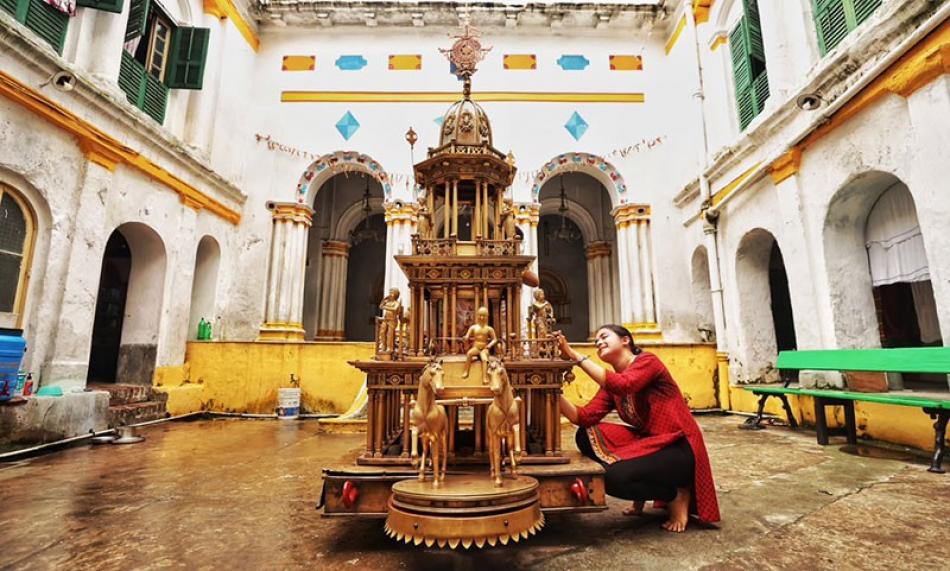


IndiGo has announced a new daily nonstop service between Mumbai and Hanoi, beginning October 25, 2026. The new route will expand the airline’s international network and improve connectivity with Vietnam’s capital, giving passengers more options and flexibility for travel between India and Vietnam.
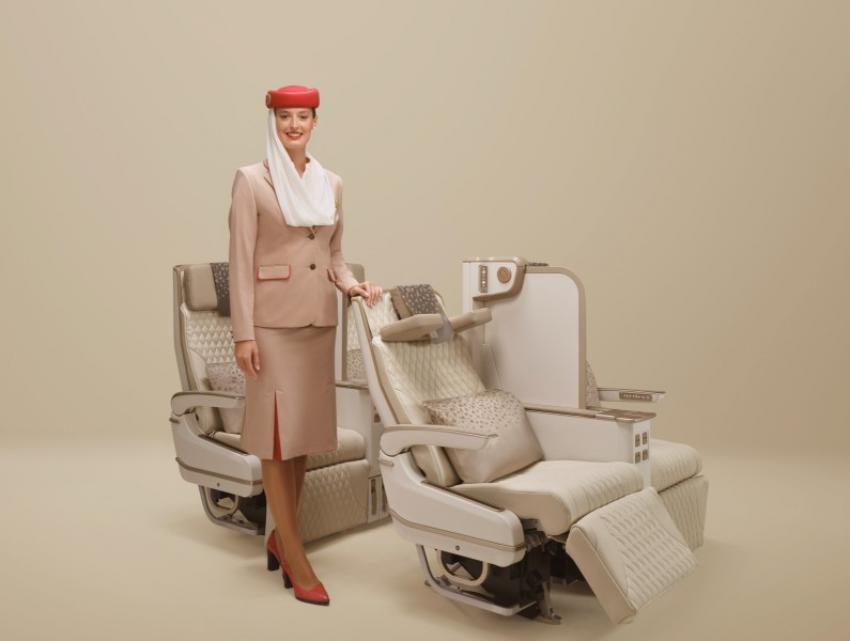
Aviation major Emirates is taking its award-winning Premium Economy experience a step further with the launch of what it describes as the world’s first electrically powered Premium Economy seat, featuring a full-height adjustable privacy screen between every seat.
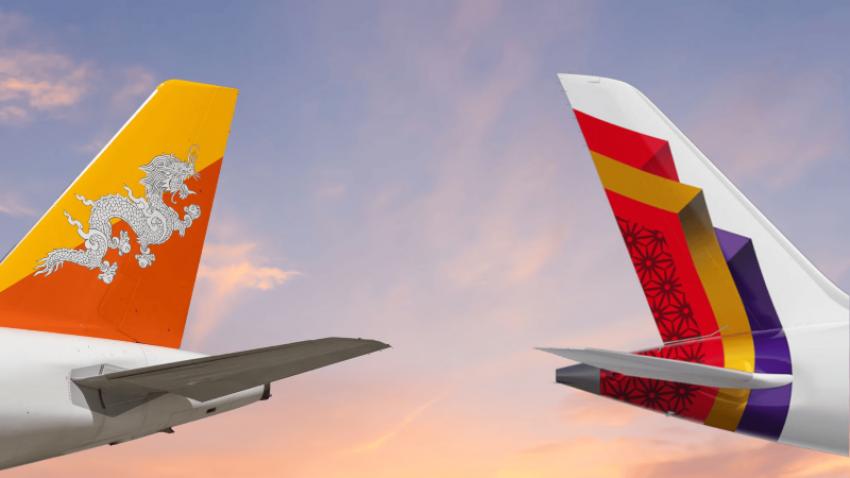
Air India and Drukair, Royal Bhutan Airlines, have entered into an interline partnership to enhance travel convenience and strengthen network connectivity between India, Bhutan, and destinations beyond.