07 May 2015, 12:26 pm
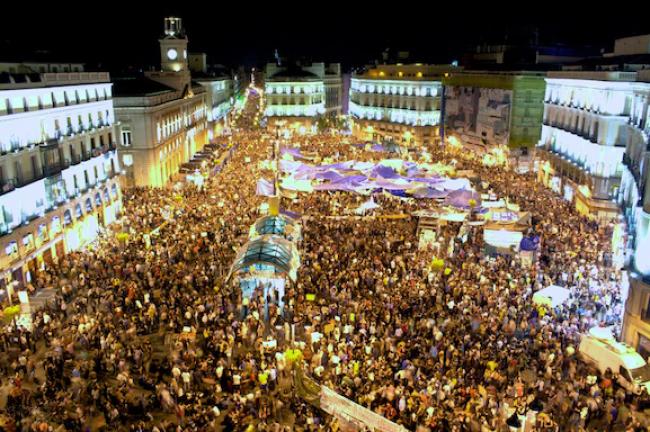
It is the first time the country has ranked top of the biennial report – published on Wednesday under the theme Growing through Shocks – and is a positive sign for the country’s nascent recovery.
The Travel and Tourism Competitiveness Report ranks 141 countries across 14 separate dimensions, revealing how well countries could deliver sustainable economic and societal benefits through their travel and tourism sector. Spain’s leadership position is helped by a world class ranking in cultural resources (1st globally), its ability to support online searches for entertainment (4th) – a measure of how well the country has adapted to consumption habits brought on by the digital revolution – as well as excellent infrastructure (4th).
Traditional strong travel and tourism destinations such as France, Germany, the United States, the United Kingdom, Switzerland, Australia, Italy, Japan and Canada complete the top 10.
Of the large emerging markets, China (17th) and Brazil (28th) made it into the top 30, whereas Russia, South Africa and India ranked 45th, 48th and 52nd, respectively. While this made Brazil and South Africa the best placed in their region, Singapore (11th) came up top in South-East Asia, and the United Arab Emirates (24th) was the highest placed nation in the Middle East and North Africa.
“The diversity in the top 30 shows that a country does not have to be wealthy to have a flourishing tourism sector,” said Roberto Crotti, Economist at the World Economic Forum. “But many countries should still do more to tackle travel and tourism challenges, including visa policies, better promotion of cultural heritage, environmental protection and ICT readiness. This in turn would drive economic growth and the creation of jobs.”
The report also identifies areas where tourism-oriented economies could do better in adapting to changing global trends as well as growing market segments. These include a growing number of middle class travellers from emerging and developing countries, senior consumers and millennials. It also finds a need for travel-reliant economies to adapt faster to online services and marketing, as mobile internet continues to define the way travellers select, plan and review their trips.
The global travel and tourism sector, which already accounts for almost one-tenth of global GDP, grew at an average of 3.4% per year over the past four. This compares favourably with the global economy, which grew at only 2.3% per year, indicating the sector’s resilience to economic shocks. In the coming five years, growth in the sector could accelerate to 5.2% per year, according to the World Travel & Tourism Council.
The report contains detailed country profiles for the 141 economies featured in the study, including a comprehensive summary of their overall positions in the index and a guide to the most prominent travel and tourism competitive advantages and disadvantages of each. Also included is an extensive section of data tables that cover each indicator used in the index’s computation.
The World Economic Forum produced the report in collaboration with Strategy& and data partners Bloom consulting, Deloitte, the International Air Transport Association (IATA), the International Union for Conservation of Nature (IUCN), the UNWTO and the World Travel & Tourism Council (WTTC).
- Phone, Wallet Stolen Abroad? Knowing These Steps Can Save Your Trip
- Travelling Abroad from India? Know How Much Foreign Currency You Can Carry
- Air India teams up with IHG, offers Maharaja Club Members reward points on hotel bookings
- Fujifilm’s new 609mm-equivalent lens brings serious long-range reach without the usual weight
- Google’s AI mode is becoming your travel agent—Here’s what it can now do
- Littering on trains to cost more? Railways doubles fine to Rs 1,000 — check other penalties
- Dubai Airport traffic crashes 31% in H1 amid US-Iran conflict
- Bali Backlash: Swiss Tourist Jailed After 'Crazy' Video Mocks Hindu Nyepi Holiday
- London’s Thames to witness Ganga Aarti: Here’s what’s happening on September 13
- Going to Sri Lanka? This new UPI perk could make your rides cheaper



IndiGo has announced a new daily nonstop service between Mumbai and Hanoi, beginning October 25, 2026. The new route will expand the airline’s international network and improve connectivity with Vietnam’s capital, giving passengers more options and flexibility for travel between India and Vietnam.

Aviation major Emirates is taking its award-winning Premium Economy experience a step further with the launch of what it describes as the world’s first electrically powered Premium Economy seat, featuring a full-height adjustable privacy screen between every seat.
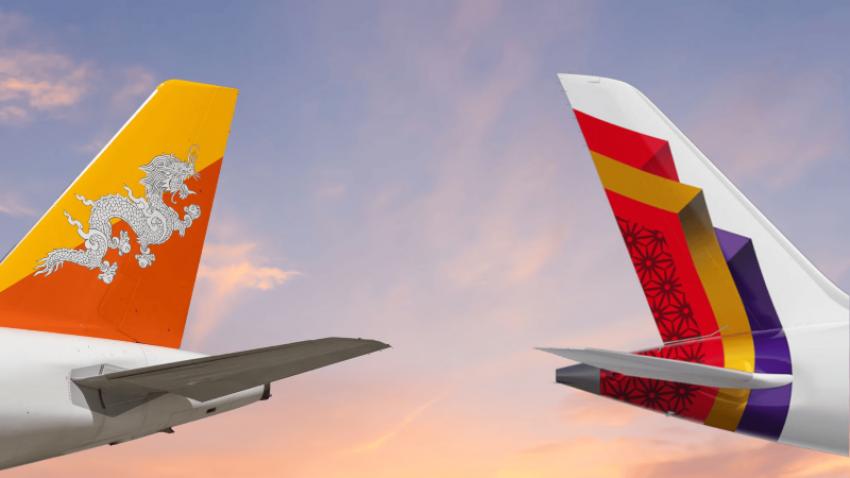
Air India and Drukair, Royal Bhutan Airlines, have entered into an interline partnership to enhance travel convenience and strengthen network connectivity between India, Bhutan, and destinations beyond.