
NITN | @notintownlive | 16 Apr 2019, 11:21 am
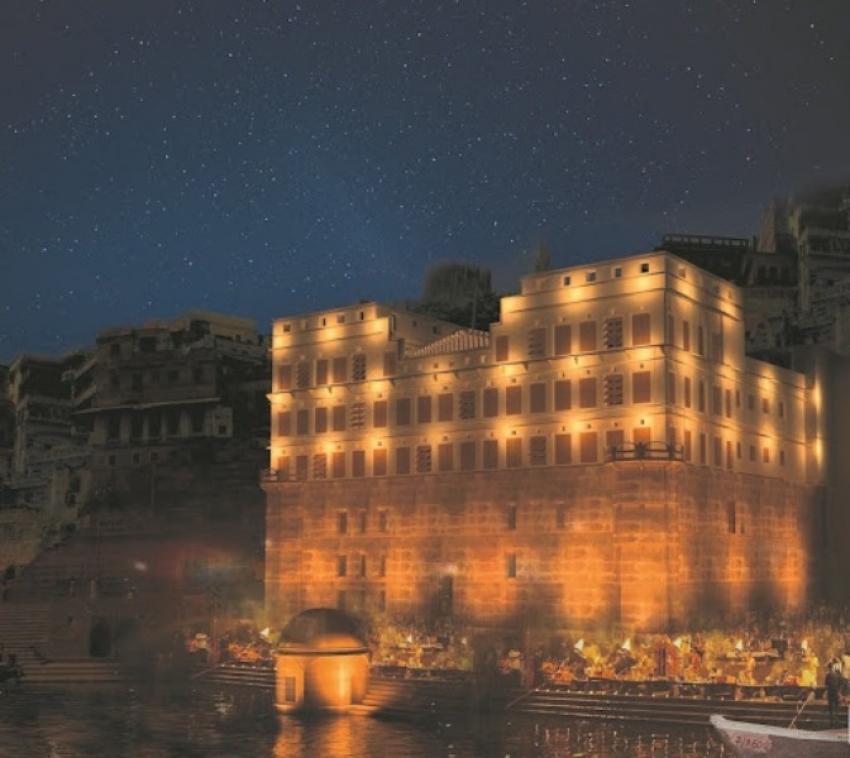
Varanasi’s historic Balaji Ghat has welcomed pilgrims and visitors for centuries, but wear and tear had made its mark. Fortunately, a preservation programme of ancient monuments has restored it to its former glory, reports New York based Michael Gallant
Since 1735, pilgrims have travelled from all over India to Varanasi to visit an expansive and striking stone staircase, stretching downward from the banks of the Ganges river to the water’s edge, as well as to experience the ornate and imposing palace that reaches skyward from the staircase’s top.
Whether for praying or performing rituals, bathing in the holy river or cremating the dead, visitors to the revered Balaji Ghat in the city has made it one of India’s most visited religious destinations. Such popularity is decidedly bittersweet though, as the centuries-long flow of devotees contributed not just to the ghat’s legacy, but also to a trajectory of deterioration.
.jpg)
In 1999, as a result of factors like heavy use, lack of maintenance, earthquakes and floods, part of the Balaji Ghat collapsed. For a decade thereafter, the structure stood as it was, weakened and deteriorating. In September 2009, a second catastrophic collapse struck; this time, consisting of the naubatkhana’s floor. Naubatkhana is where shehnai maestro Ustad Bismillah Khan practised and played his music.
Without immediate intervention, it seemed, the site would soon become little more than dust, debris and memories.
Luckily, the same year as the second collapse, the Indian National Trust for Art and Cultural Heritage (INTACH), a nonprofit organization dedicated to protecting and conserving India’s heritage, began documenting the site. And, in 2012, a major, international restoration effort followed. INTACH’s efforts to save and restore the ghat were supported by sources including the U.S. Ambassadors Fund for Cultural Preservation (AFCP) of the U.S. State Department as well as the New York-based nonprofit organization World Monuments Fund through a grant from American Express. AFCP supports the preservation of cultural sites, cultural objects and forms of traditional cultural expression in more than 100 countries around the world.

In the case of Balaji Ghat, the AFCP grant to INTACH made possible the detailed documentation of the building, a necessary foundation upon which the restoration work could progress. Yet, even before the first structural drawing could be rendered, a formidable amount of work was required. According to World Monuments Fund, which included Balaji Ghat in its 2012 World Monuments Watch List, “seven hundred tons of debris were removed from the collapsed portion of the structure and examined to determine which pieces could be re-used when reconstruction began.” The World Monuments Watch, a global programme of the organization, identifies endangered heritage sites and directs financial and technical support for their preservation.
Initial documentation efforts included archival research to help INTACH fully understand the structure’s past, as well as detailed photographic documentation of the building’s windows and doors, construction materials and architectural ornamentation. Accompanying this visual record was a series of measured drawings, meant to record the building’s proportions, character and architectural details, and guide INTACH’s experts through the restoration process.
The AFCP grant also supported the surveying and documentation of the building’s bones, bricks and mortar. Experts tested wood for moisture and decay, while bricks and limestone used in the construction were examined for strength, behaviour when exposed to water, and more. This was to understand how the ghat’s basic building blocks would withstand the centuries to come, and to select new materials for the restoration that would integrate organically with the existing structure.
Such early tasks were key to the project’s eventual success. “The Ambassadors Fund grant was the first important step that led to the revival and restoration of the Balaji Ghat,” says Bindu Manchanda, project director for the Architectural Heritage Division of INTACH.
As Manchanda, Divay Gupta and other INTACH colleagues worked hard to restore the structure in the years that followed, they strove not only to keep the reborn Balaji Ghat as true to its heritage as possible, but to make it even more welcoming to visitors.
After the restoration, the grand building was adapted to be reused as a museum and cultural center, writes Manchanda in her book, The City Forever: Varanasi Balaji Ghat Initiative. She describes the project as the first-of-its-kind in Varanasi, one that she expects to have far-reaching educational benefits for local residents and visitors alike.
“This project is even more important, as this is the only ghat in Varanasi that has been revived for non-religious, non-commercial use; entirely for the benefit of the community,” says Manchanda. “It houses a museum, an interpretation center and an auditorium for cultural activities showcasing the life, crafts and culture of Varanasi’s people and its environs.”
(Courtesy SPAN)
Trans World Features
- Kosha Mangsho Roll to Gurer Sandesh Flan: Starbucks Kolkata unveils special Pujo menu blending Bengali flavours with global favourites
- Ganesh Chaturthi in the Skies: What Air India Has in Store for Flyers in its Lounges
- US Envoy Sergio Gor gets a taste of Darjeeling, enjoys Toy Train ride, tea, and local culture
- 1000 Islands: Back to the Waters That Never Left Me
- Priority Pass finally passed the test at JFK: One card, one lounge, a small victory in New York
- Do Not Miss This Museum When You Are in Purulia Next
- Texas Barbecue Takes to the Skies as American Airlines Expands Pecan Lodge Partnership
- Want a Taste of Spain? Taj Taal Kutir Brings 'Spanish Merienda' to Kolkata
- Explore This Hidden Gem in Arunachal - India's 101st Ramsar Site
- Bengali actor Koneenica Banerjee celebrates Bengal's Hilsa love at Kolkata's grand Ilish festival
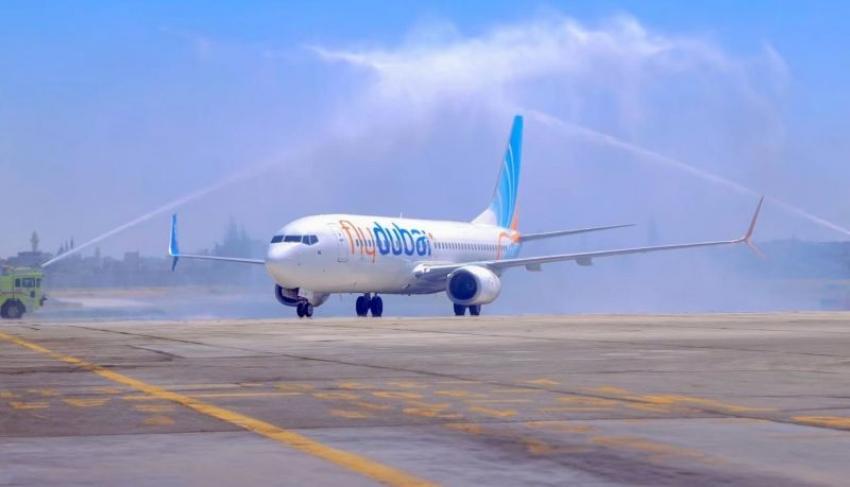
flydubai has temporarily suspended all flights to Israel until further notice, citing safety concerns, following a cockpit fight aboard a Tel Aviv-bound flight last Thursday in which the co-pilot allegedly attempted to crash the aircraft, media reports said.

IndiGo is celebrating two years of its loyalty programme, IndiGo BluChip, which was introduced in October 2024 and has since grown to include an ecosystem of more than 25 partners. Over this period, it has emerged as one of the country’s fastest-growing loyalty programmes.
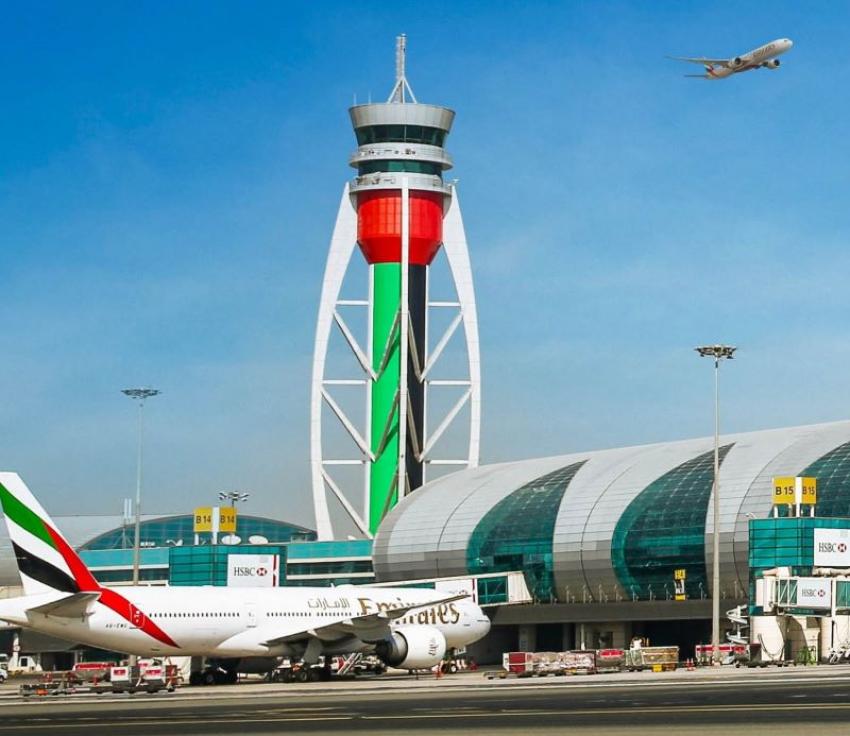
Air Canada has extended the suspension of its flights to and from Dubai, with services to Dubai International Airport (DXB) now cancelled until the end of March 2027.