
NITN | @notintownlive | 06 Apr 2026, 08:40 am
 Prague
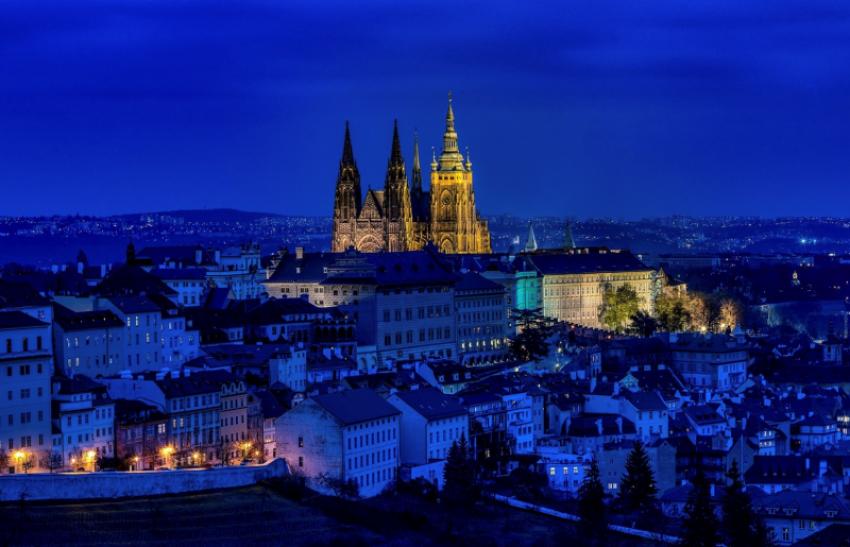
Prague at night—mysterious shadows and golden lights weaving quiet magic through its timeless streets. Photo: Pixabay
Sujoy Dhar spends barely 48 hours in Prague — and the Golden City of a Thousand Spires refuses to let go
We arrived in Prague on a wintry March night, rain falling in cold curtains, our rideshare driver depositing us at entirely the wrong address. Before the irritation could settle in, a man came running through the dark with an umbrella. He was our host. That small, unhesitating kindness — a stranger dashing into the rain for guests he'd never met — turned out to be the perfect introduction to this city.
Prague doesn't ease you in. It ambushes you with beauty.
Called the Golden City of a Thousand Spires, and sometimes simply the Heart of Europe, Prague is a place of almost theatrical grandeur — retro trams rattling down cobbled streets, Gothic spires needling a grey sky, Baroque facades burnished by centuries of history. The touristy Prague and the lived-in Prague exist in easy companionship here, and both are worth your time.
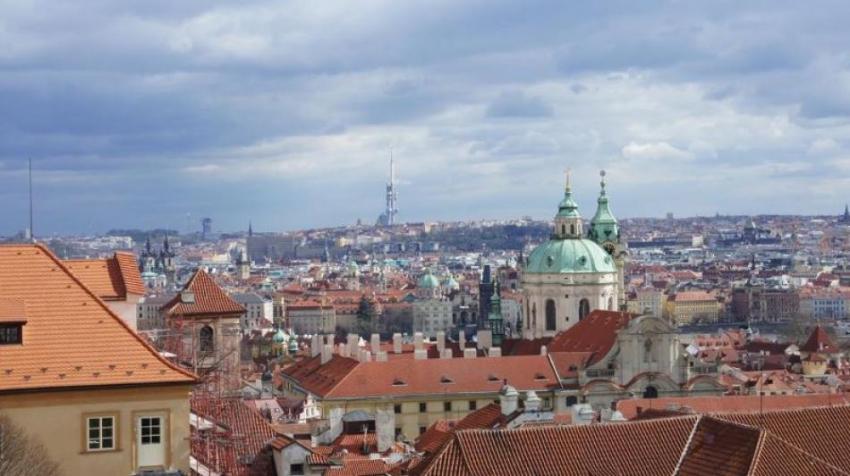 A city of spires, stories, and timeless charm. Photo: Sujoy Dhar
The Square That Beats Like a Heart
Begin where most stories about Prague begin: Wenceslas Square. Named after Saint Wenceslas, patron saint of Bohemia, it is part boulevard, part monument, part open wound of history. Hotels, shops and fast food joints line its edges today, but the square has borne witness to some of the defining moments of the 20th century. It was here, on January 16, 1969, during the Prague Spring's anguished aftermath, that a young student named Jan Palach set himself ablaze to protest the Soviet invasion of Czechoslovakia. The square absorbs that memory quietly, the way old cities do.
From Wenceslas Square, walk toward the Jewish Quarter — Josefov — that lies shrouded between the Old Town Square and the Vltava River, heavy with legend and loss.
And then, as you push deeper into the Old Town past shop windows glittering with the famous Czech crystal glassware, the medieval world announces itself with a spectacular flourish.
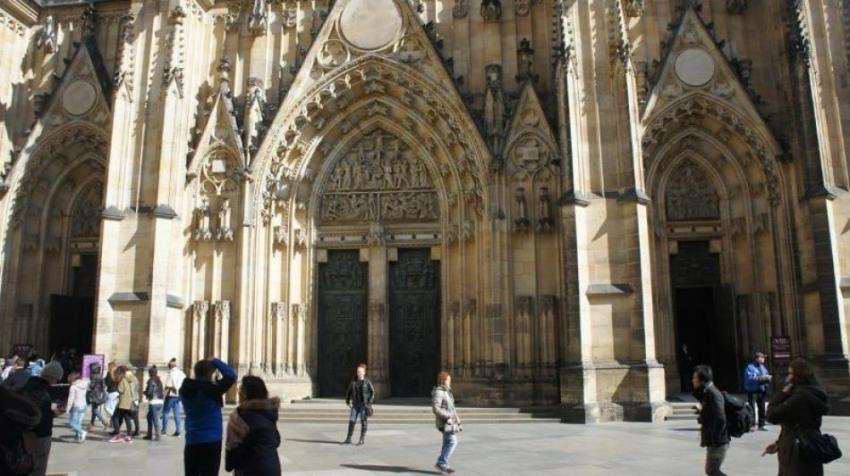 Where Gothic churches define the city’s soul. Photo: Sujoy Dhar
The Clock That Blinded Its Maker
The Prague Astronomical Clock has stood in the Old Town Square for over 600 years. Every hour, it puts on a small, solemn performance — a procession of Apostles, moving statues, a visualization of time that no other instrument on earth replicates. Tourists gather in clusters, necks craned, waiting for the mechanism to stir.
The legend behind it is as dramatic as the clock itself. Master Hanuš built it in 1410, and the city councillors were so enchanted — and so covetous — that they feared he might build another like it for a rival city. So one dark night, they had him blinded. The clock, magnificent and terrible, remains only here.
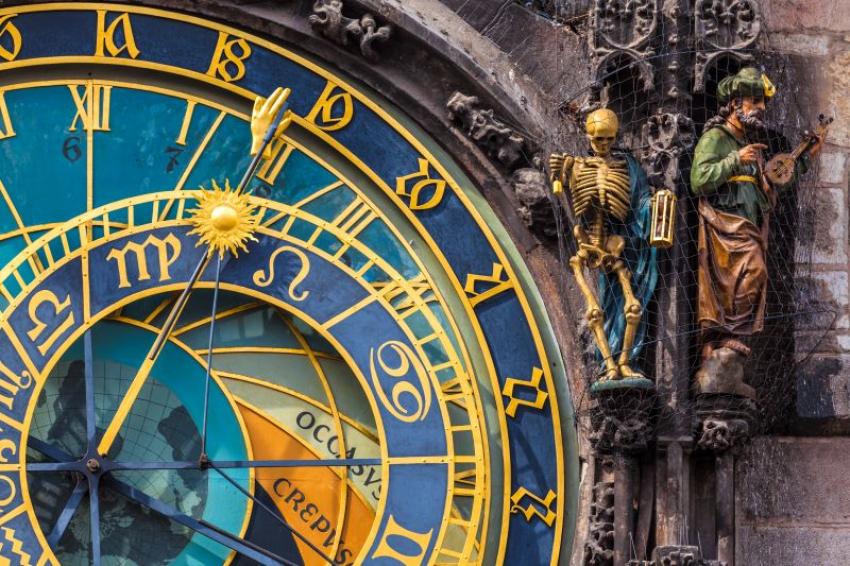 Prague Astronomical Clock. Photo: Czech Tourism.
Standing in the vast Old Town Square, surrounded by Gothic-to-Baroque architecture dating back to 1364 while a street musician plays something melancholy nearby, you feel the full weight of that story. The ambiance is almost unfairly beautiful.
The Bridge, The River, The Castle
Walk toward the Vltava River and you'll come face to face with the image you've seen on a hundred postcards: Charles Bridge. Resting on 16 arches guarded by ice-breakers, the bridge is flanked by three towers, the most iconic being the Old Town Bridge Tower — a Gothic sentinel that ushers you across with quiet authority.
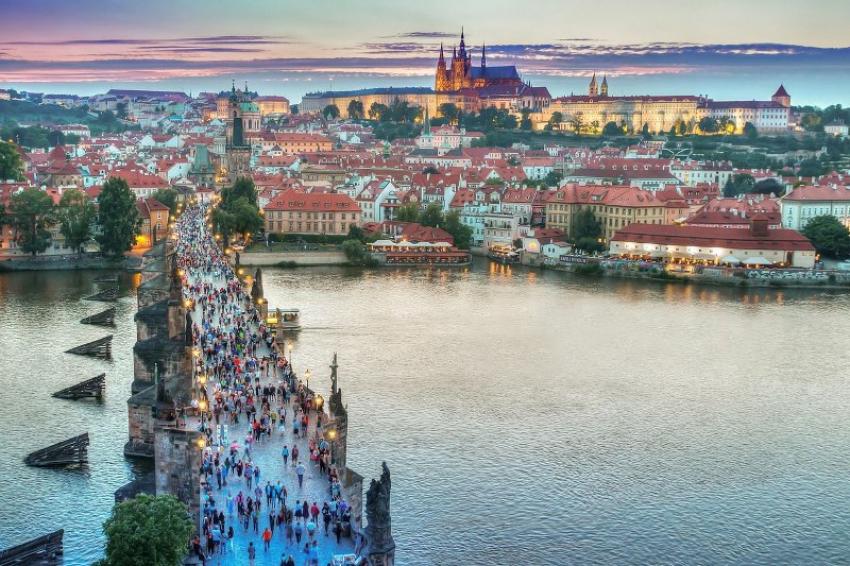 Charles Bridge is the beating heart of Prague. Photo: Pixabay
On either side of the bridge runs a continuous alley of 30 statues and statuaries, mostly Baroque, originally erected around 1700 and now all replaced by replicas.
At sunrise, Charles Bridge is said to be one of the most romantic spots in Europe, alive with tourists, street painters and musicians. We crossed it in the afternoon and found it magical enough.
On the far bank, vintage cars sat gleaming for tourists willing to pay for a ride, and the cobbled road began its climb uphill — winding, sloping, insistent — toward Prague Castle.
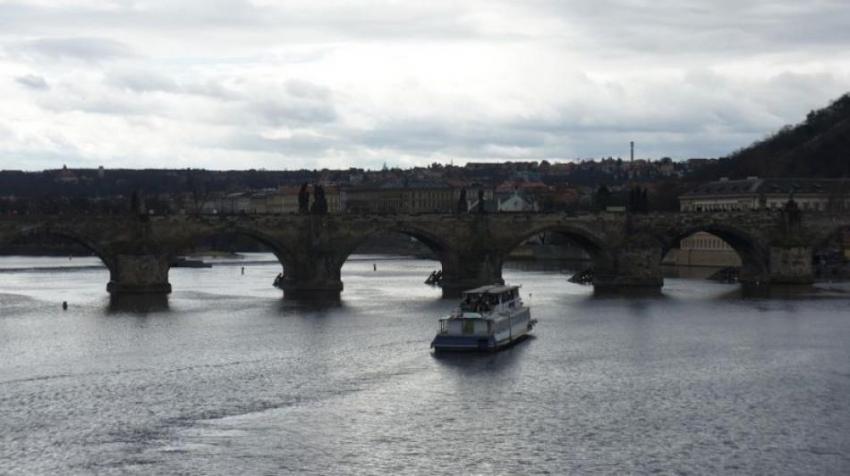 Charles Bridge—Prague’s most iconic landmark. Photo: Sujoy Dhar
The castle, dating to the ninth century, is the largest in the world. It has been home to kings of Bohemia, Holy Roman emperors, and Czech presidents. But before you lose yourself in its courtyards and gardens, stop on the approach road and turn around.
The panoramic view of Prague spread below — spire after spire emerging from the rooftops — is the kind of sight that makes you reach, uselessly, for your camera.
Inside the castle complex, St. Vitus Cathedral is the undisputed jewel. Medieval masters built its grand interior; sunlight, streaming through stained-glass windows, does the rest. Don't leave without wandering down the Golden Lane — a tiny alley of miniature fairytale houses hugging the castle ramparts, where the alchemists of Emperor Rudolf II once lived and toiled, chasing the Philosopher's Stone and the Elixir of Youth. House No. 22, the tourism brochure gently reminds you, is where Franz Kafka once worked. Of course it is.
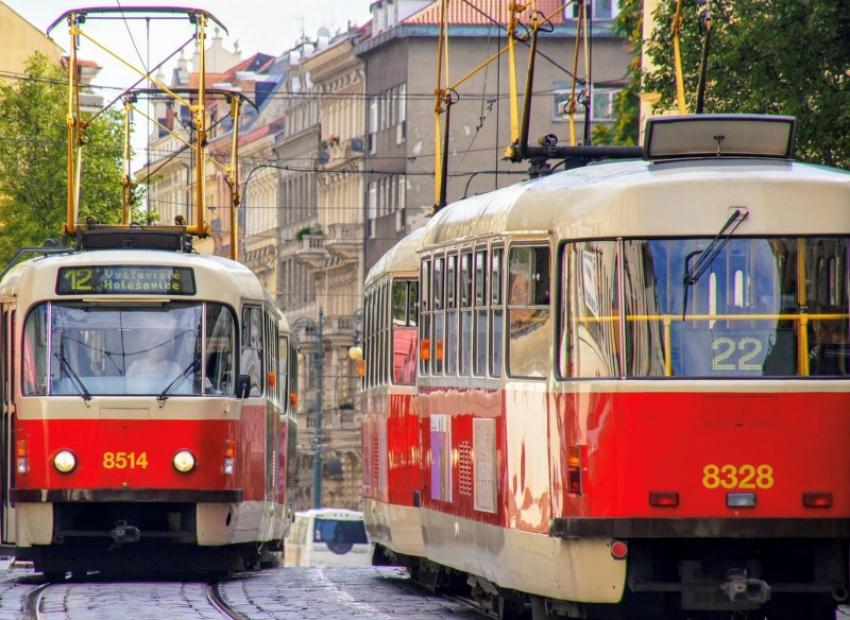 Retro trams rattling through Prague’s cobbled streets. Photo: Pixabay
Of Dumplings and Czech Beer
On our way back from the castle, we ducked into a restaurant called Gokul for an Indian vegetarian lunch — a small act of culinary cowardice I can admit to now. Prague deserves more adventurous eating. The local cuisine is hearty and unapologetic: pork or beef with thick sauces, washed down with some of the finest — and most proudly affordable — beer in the world.
If meat isn't your thing, at least try the knedlíky: traditional Czech dumplings made from wheat or potato flour, boiled in rolls, sliced and served hot alongside almost everything. Simple, filling, quietly wonderful.
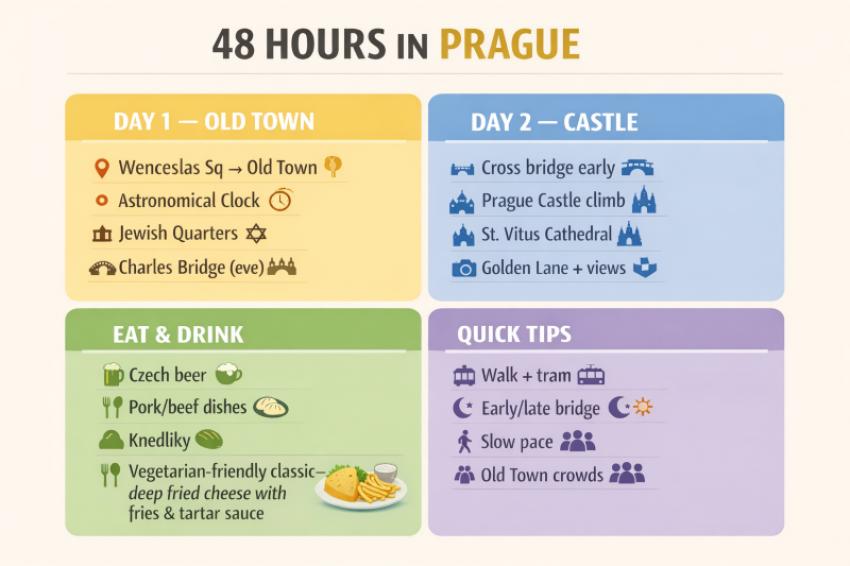 AI image
Prague in 48 hours is not enough. It never is. But even this brief surrender to the city — its medieval clock, its rain-soaked bridge, the man who ran out with an umbrella — leaves a mark that lingers long after you've moved on to the next destination.
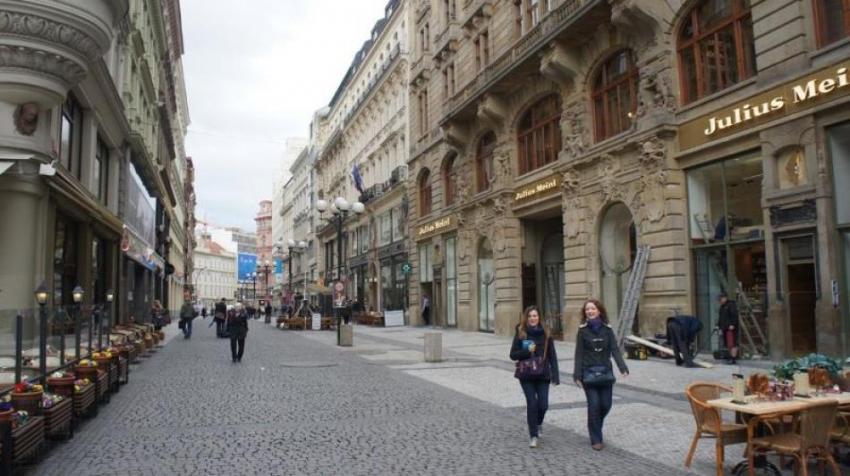 Every corner of the city feels like a postcard. Photo: Sujoy Dhar
Being in Prague is like walking backward through time: through the Cold War and communism, through empire and plague and rebellion, all the way back to the Middle Ages. The city wears its history not as a burden, but as an ornament.
And it wears it extraordinarily well.
- Want a Taste of Spain? Taj Taal Kutir Brings 'Spanish Merienda' to Kolkata
- Explore This Hidden Gem in Arunachal - India's 101st Ramsar Site
- Bengali actor Koneenica Banerjee celebrates Bengal's Hilsa love at Kolkata's grand Ilish festival
- Bhutanese Bites to Steaming Momos: Taj Taal Kutir’s Food Festival Takes Kolkata on A Himalayan Trip
- Imagine doing yoga on Hooghly River between two iconic bridges—Kolkata just made it happen
- Crafted in India, Framed in the West
- Bengal's Chingri Malai Curry Outshines Global Rivals, Ranks Among World’s Finest Shrimp Dishes
- From Mumbai to Global Recognition: Ashok Vada Pav Ranks 25th in TasteAtlas' Iconic Sandwiches List
- Digha — A Place Where Waves Speak to the Heart
- Dosa Outshines Global Pancakes! Indian Classic Makes TasteAtlas 2026 Best List


Heart Aerospace has announced the successful first flight of its X1 demonstrator aircraft, marking what the company describes as the largest battery-electric flight in aviation history.
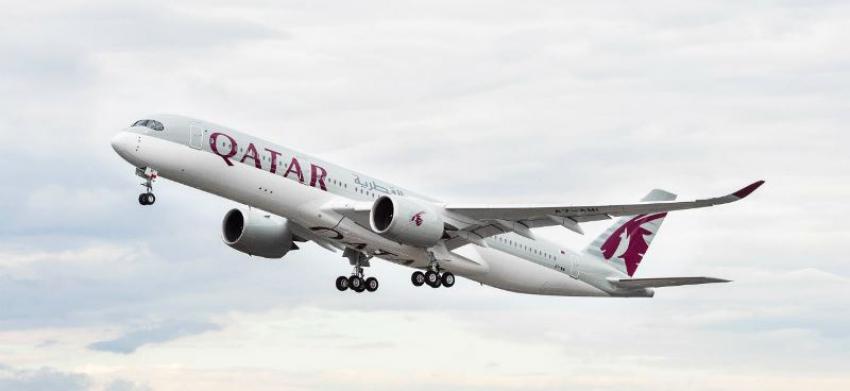
Qatar Airways Holidays is set to elevate the Qatar stopover experience with the launch of exclusive Formula 1 Qatar Airways Qatar Grand Prix 2026 packages.

Akasa Air has launched Akasa Elevate, a loyalty programme through which members can earn Elevate Points on eligible flights and ancillary products and services. The programme also offers benefits linked to membership tiers, with members able to progress through four tiers based on eligible flights or spending.