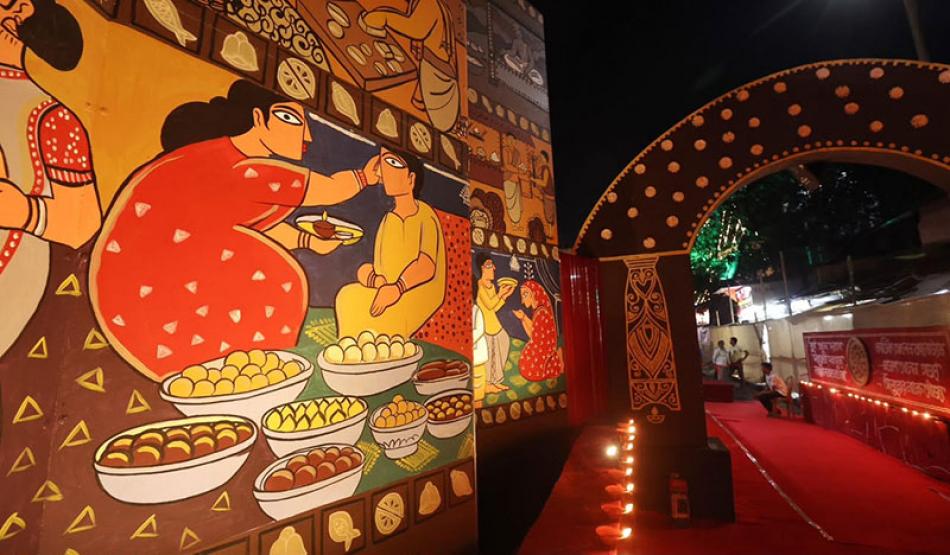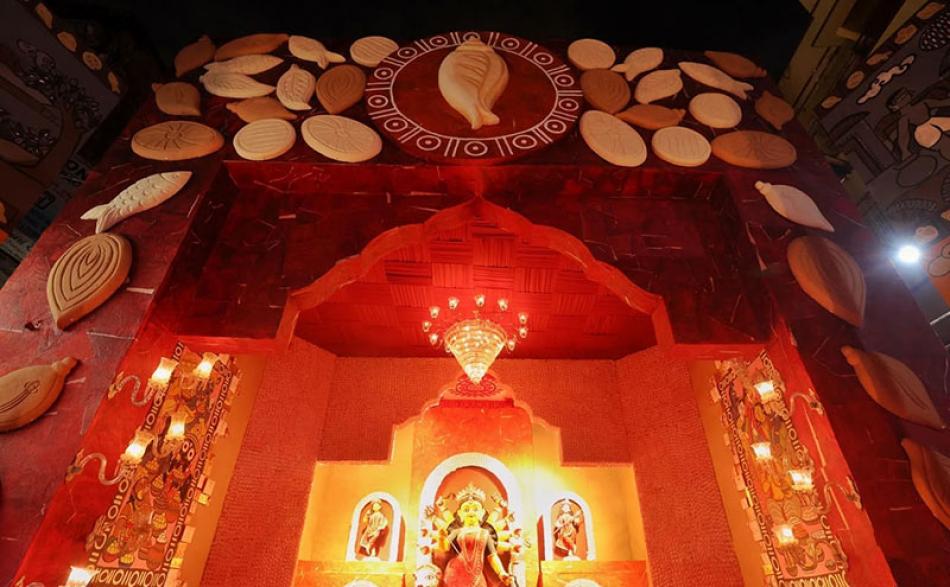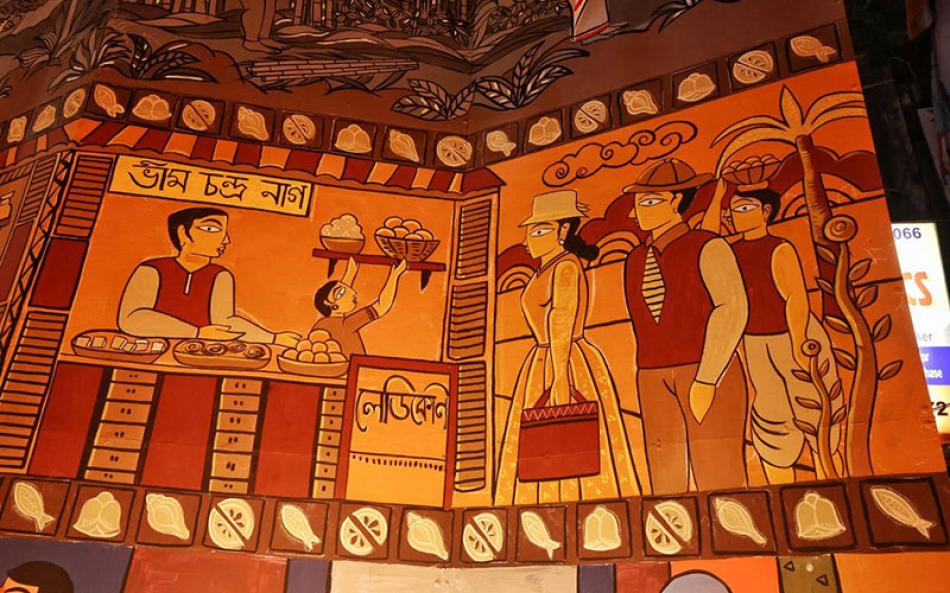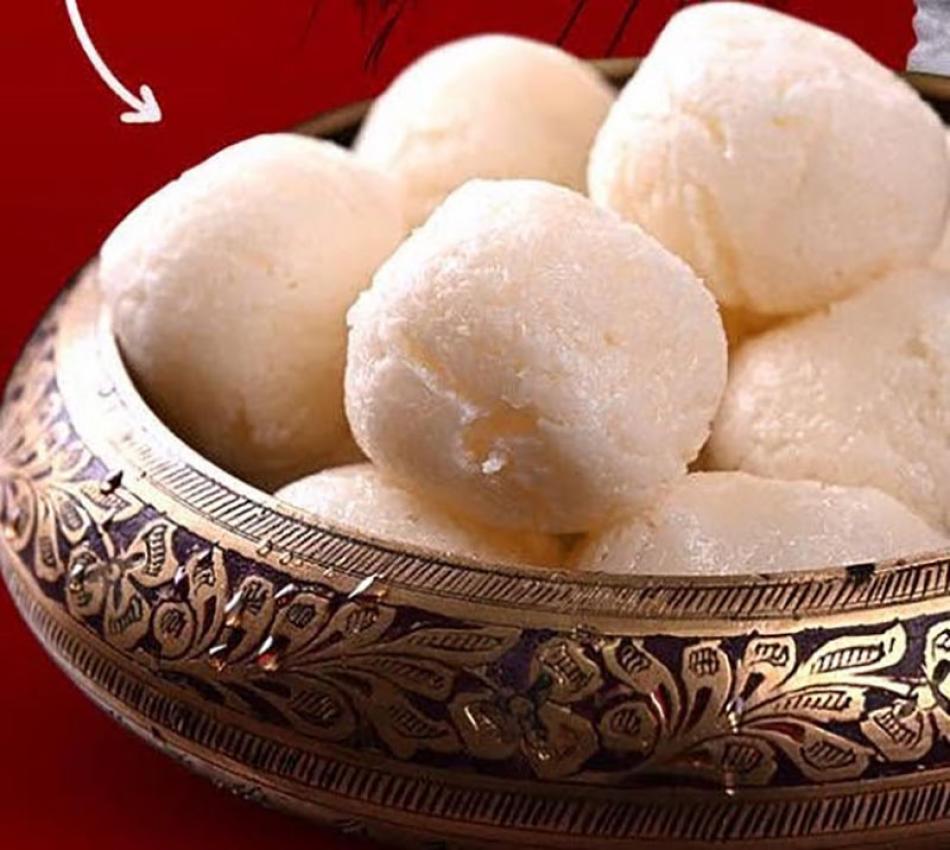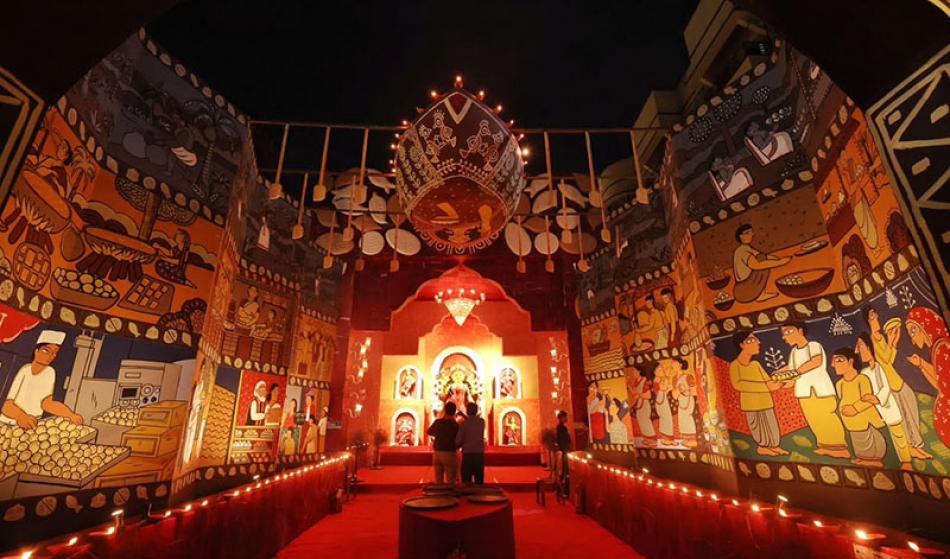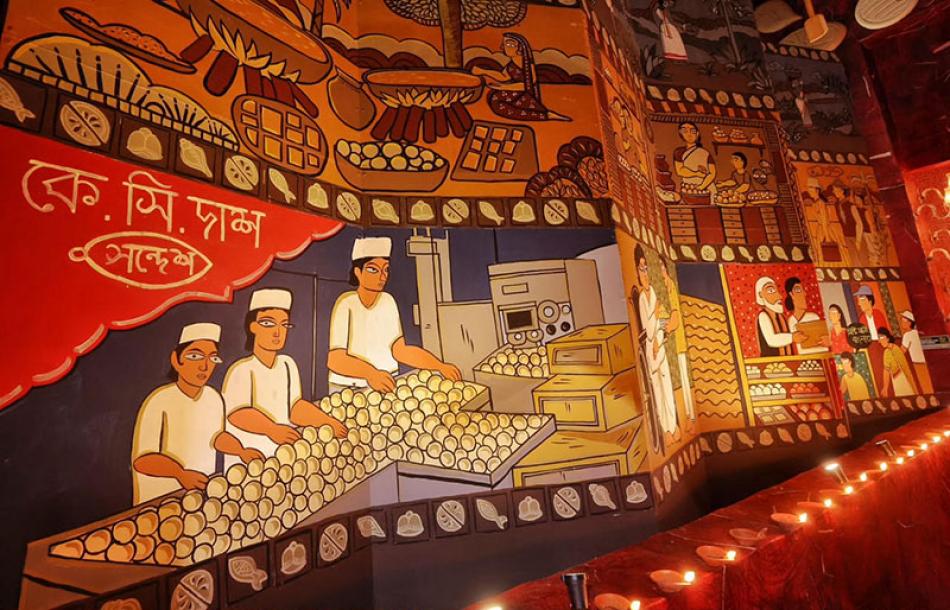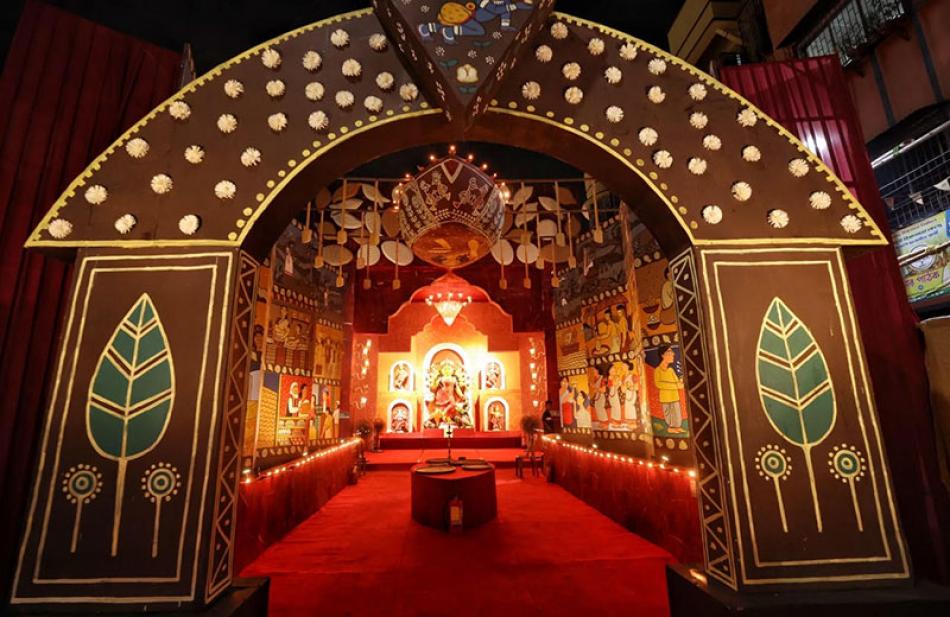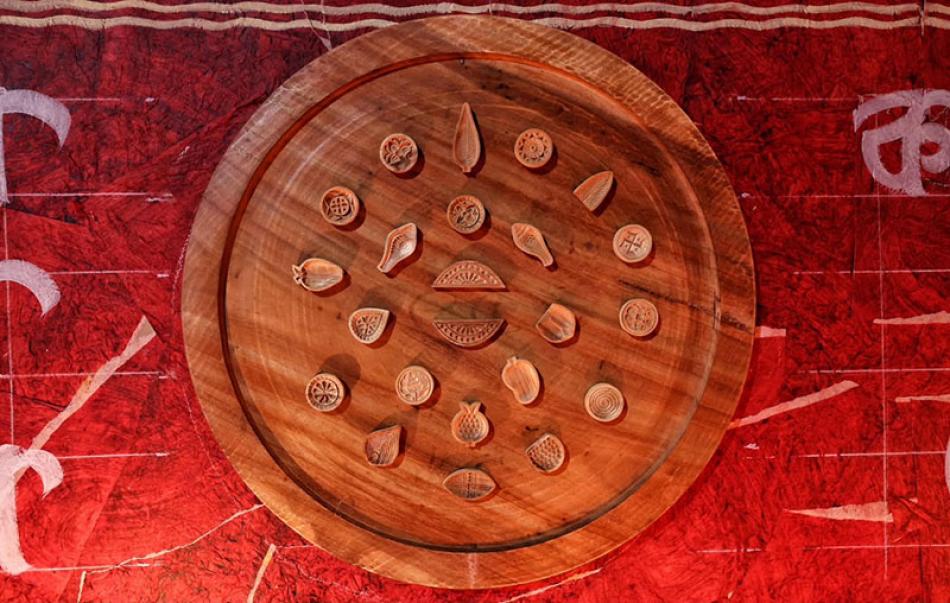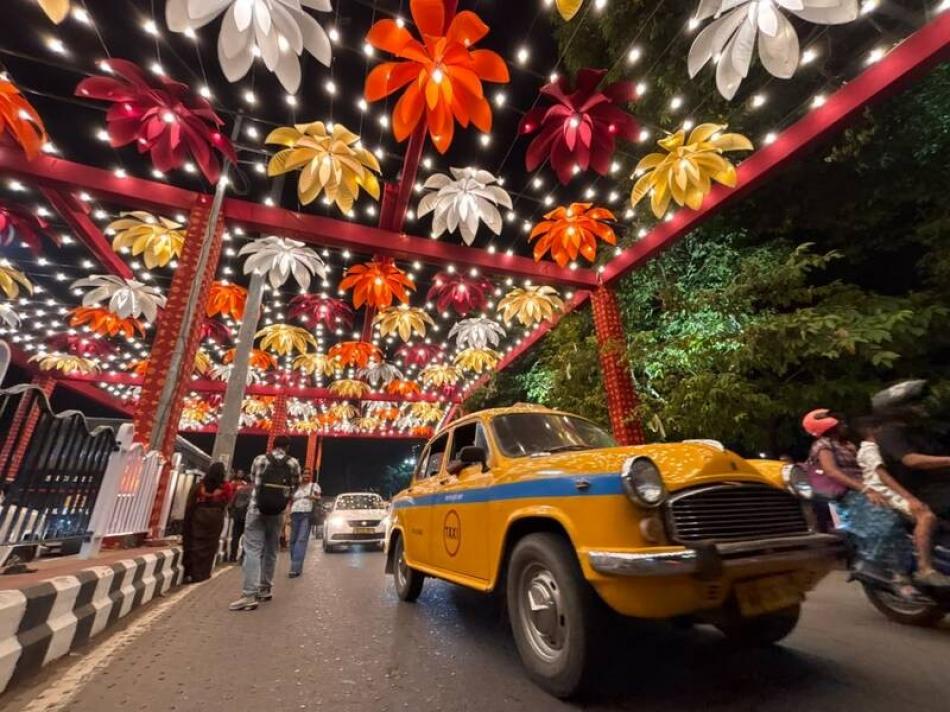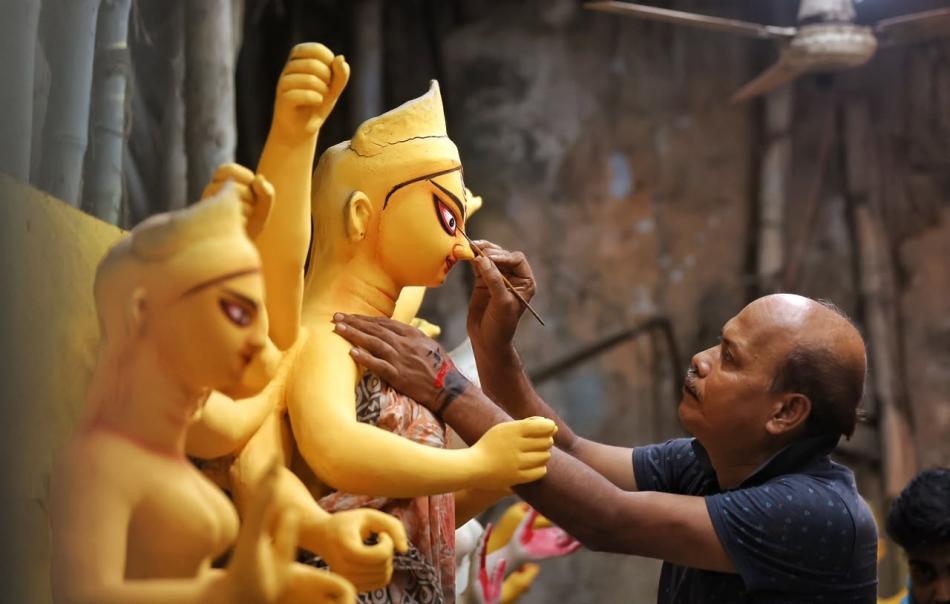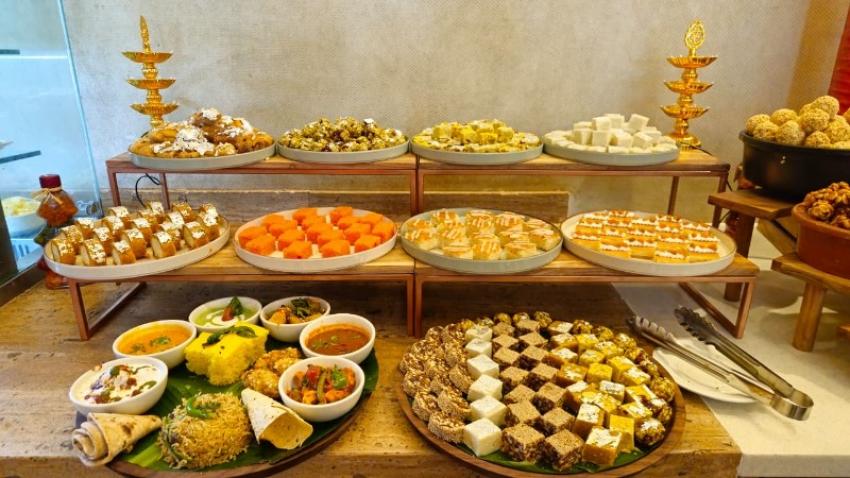
A central Kolkata Durga Puja by Wellington Nagarik Kalyan Samity celebrates the rich heritage of Bengal’s traditional sweets through its theme, "Mishtanna Puran", tracing the evolution of mishti across the centuries. The pandal presents this journey in two phases—before and after Chaitanya Mahaprabhu—exploring how the art of sweet-making developed and transformed over time. It takes visitors back to the 15th century, when milk used in sweets was largely prepared in its solidified, condensed form, known as khoa, and follows the evolution of these traditional preparations into the much-loved rosogolla and sandesh of the modern era. Photo: Avishek Mitra/IBNS