
NITN | @notintownlive | 27 Aug 2018, 11:26 am
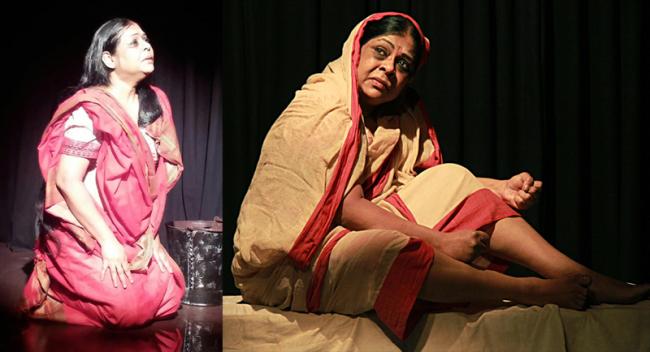
Kolkata, Apr 27 (NITN): Adapted from short stories by Dibyendu Palit, Selina Hossain and Manik Bandopadhyay, the East Side Stories, directed by Mahmud Alam, is a reflection of the pain of separation that the partition of a country with shared language and culture inflicts on the people.
The play will be held on September 1 and 2 in Kolkata at JANUS, Centre for Visual & Performing Arts, at 7pm.
Director's note:
The partition of India was a traumatic experience for all, but was more so for the millions of people who crossed the borders on both sides.
It is generally accepted that the 1947 Partition of Bengal is very different from that of West Pakistan because of numerous social, political and historical reasons.
The 1950 communal riots caused a massive number of people to enter West Bengal. The very core of everyday lives of these people were so intertwined, that the wounds still continue to fester. Interestingly the westward migration has continued unabated for the last seven decades since independence.
The identity of the Bengali people, whether Hindu or Muslim, rests on their shared language, rituals & customs as well food habits & memories.
The emergence of Bangladesh as an independent nation in 1971 is proof that the partition of India on the basis of religion was wrong.
History is witness to the fact that whenever there is violent uprooting and displacement of a people, the question of gender becomes a serious issue and at the same time compulsions of survival start to take precedence over moral concerns.
Synopsis:
Her House
The story of Ayesha, who was born in Calcutta, but moved to Dhaka when East Pakistan became Bangladesh in 1971. She is returning today after three years on the invitation of a Friendship Committee.
In 1970, her family had moved to Dhaka but Ayesha had stayed back in Calcutta, in order to finish her studies. During this time she developed a strong bond with Amit. On her father’s death she moved to Dhaka for good. She had kept in touch with Amit and his family through letters.
Ayesha had written to both Amit and his mother, informing them of her impending visit. As Ayesha lands in Calcutta she is hit by a gust of memories and a strong desire to reconnect with her city of birth. She is reminded of Amit’s last letter where the words “ that particular soil in which we take root” still bothers her. The question whether the country of one’s birth was also one’s motherland always awakened a sense of rootlessness in her.
As the story unfolds we see the effect of memories on our sense of belonging and identity.
Prateek / Symbol
This story is of Pushpita, who is pregnant and on the verge of labour, crossing the river Mahananda with her husband Ali Ahmad, in a boat to East Pakistan along with several others of her village.
She struggles throughout the journey with her pain of labour as well as the pain of being evicted from the country of her birth.
As she reaches the new land, her water breaks. She wonders if other sons born on this soil will one day turn against each other…..
She names her son Prateek Ahmed, a symbol of a new hope created by a Hindu mother and a Muslim father.
The Final Solution
In the last story, we find that Mallika’s family of four, dispossessed of all their belongings, have taken shelter at a railway platform in Calcutta.
For some reason Mallika’s family have placed their faith in Pramatha and Ramlochan of ‘ Help and Welfare Society’.
As the story progresses, we see how the women are at the mercy of those ready to take full advantage of the all around collapse of norms. Exploited in every possible manner, even willingly so, they accept any offer in a desperate bid to survive.
Mallika had resigned herself to the situation when she is called to Pramatha’s house. Something snaps inside her. She believes she has found a way out - the final solution.
Venue and time: JANUS, Centre for Visual & Performing Arts, Suraiya Court, 187 Park Street, Kolkata-17; Sep 1 and 2, 2018; time : 7pm
Contact: 98369 55998
- Sona Institutions to open a College of Nursing at Salem
- Vee Technologies’ engineering division delivers 3,000th fire truck design for the US
- Jagannath comes to Kolkata: Up to 10 lakh devotees expected at Vishwashanti Mahayagya from April 17
- New Sheriff Goutam Ghose to unlock Kolkata's buried colonial past — records untouched since the East India Company
- Sona College’s Fashion Technology Dept. opens admissions to its 4-year B Tech program
- Som Tales: Soma Bose’s podcast celebrates the power of storytelling and conversation
- Prabha Khaitan Foundation and WWF-India to celebrate the unsung guardians of India's forest and wildlife
- Vee Vault Capital invites first cohort of high-potential founders
- Sona College student Team Nexus AI designs an intelligent PLC programming assistant
- Ind.AI: Sovereignty, jobs, energy and the “What If?”
The ongoing conflict in Iran is exerting significant pressure on the global aviation sector, with rising jet fuel prices and supply concerns creating challenges for both airlines and passengers.

Etihad Airways has announced a special promotional offer on its Pets Onboard service, making it more accessible for travellers flying with their cats and dogs.
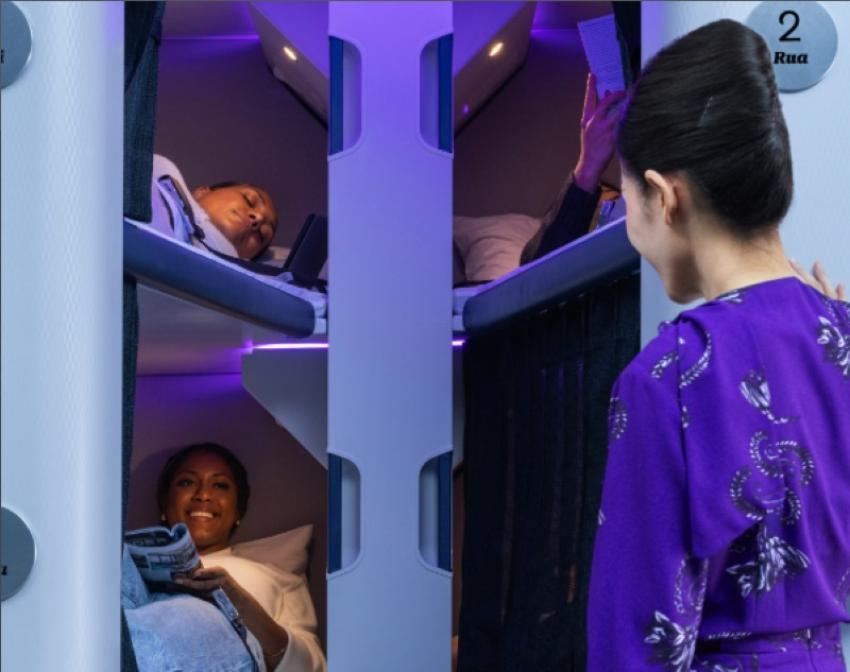
Travelling with Air New Zealand is set to become significantly more comfortable, with the airline introducing its innovative Skycouch — a feature that allows footrests to fold up and convert three Economy seats into a flat surface, giving passengers space to stretch out and relax.