
NITN | @notintownlive | 07 Dec 2020, 01:27 am
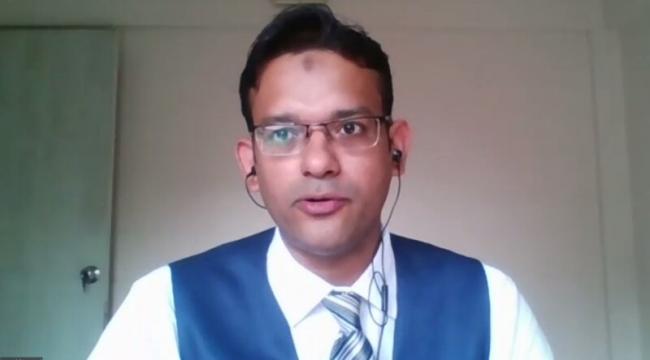 Hamid Ansari
Hamid Ansari at Kitab session
Techie and author Hamid Ansari, who was caught in Pakistan being accused of being an Indian spy, wrote about his ordeal and suffering days in the South Asian country in his book Hamid. In an interaction with senior journalist Nidhi Razdan at Kitab, an event organised by Prabha Khaitan Foundation and presented by Shree Cement, in late November, Ansari bared his thoughts. India Blooms correspondent Souvik Ghosh brings excerpts
What made you decide to write your story in a book?
Actually when I was behind bars, to be precise in solitary confinement, facing torture and hatred, the only mode of communication was by writing on bathroom walls. So I thought this mode is one through which I can communicate to everyone. Throughout the six years (of my jail term), the things that I have faced, it changed my perception also. I met both good and negative people so I wanted everyone to know there are both good and bad things but it depends on how we look at them. When I was in prison, Rakhshanda madam (Rakhshanda Naz, Pakistani journalist) used to inspire me to write about my experiences.
.jpg)
Hamid Ansari
Give us a brief summary of how you landed up in Pakistan, get arrested and end up accused of being a spy!
It had started with an online platform which no longer exists. So using the platform, I found a girl and came to know each other. I had developed a soft corner for her. On one fine day, she had urged me to save her life as she had claimed she was going to commit suicide. Then she had suddenly disappeared and that's when I had started searching for her on Facebook. Then I came to know about her from a journalist that the girl was made a scapegoat for the murder her brother had committed. The journalist had assured me of all help to reach there and when I stepped into Pakistan, he had backstabbed me by calling the agencies, which caught me accusing me of being an Indian spy.
.jpg)
Nidhi Razdan
How did you get hope on each day in prison?
Initially I was losing hope because I was told that the minimum punishment was 35 years which can also extend to death penalty. I was completely helpless. I didn't get any support or even a consular access. I couldn't contact the embassy. There was no help. Though I felt I was doomed, few people in the investigating team had updated me that my case was going in favour of me. So at one point, I thought maybe the truth will come out and I will get justice someday. So that was the only hope I had. When I was shifted to a civil prison, I could contact Rakshanda madam and the lawyers. So all these things had started adding as a hope. These small hopes started motivating me.
.jpg)
(Clockwise) Hamid Ansari, Geeta Mohan, Nidhi Razdan, Rajdeep Sardesai
Were you able to write down your thoughts?
In solitary confinement, I had no access to pen and paper. Once I was shifted to civil prison, I had access to pen and paper. Then I started writing down my thoughts.
How are you doing now? It was definitely not easy to get back to your feet.
Once I came back, people had an impression that anyone who was behind the bars is a criminal. No one wanted to know the reality behind the incident. People do not accept me for the capabilities I have. I was told in Pakistan during interrogation that my nationality was the only crime. So I am facing difficulty in standing on my feet and getting stabilised.
.jpg)
And what are your feelings about the people of Pakistan now?
While some people during the interrogation in Pakistan were only asking me about my alleged mission considering me as a spy, there were others who had morally boosted me. In the civil prison, I was attacked by some people and was also protected by others. People in Pakistan are also good and chanted "India Zindabad" and also expressed their admiration towards Sachin Tendulkar, Virat Kohli (Indian cricketers) and others. The way they look at us is completely different from what we think. Good and bad are there in every individual, so we cannot generalise a society or a country.
.jpg)
- Project Prayas: Taj Hotels, Prabha Khaitan Foundation turn hospitality floors into learning spaces for young adults with special needs
- Sona College of Technology Fashion Technology students win Ministry of Textiles' Design Innovation Hackathon
- Reliance Industries posts record quarterly revenue of ₹3.4 lakh crore, Jio IPO on the horizon
- Prabha Khaitan Foundation, French Embassy explore deeper Indo-French cultural collaboration
- World Music Day 2026 Concert Writes a New Chapter in Kolkata's Cultural Soul
- Big boost for UPI: India’s digital payment system expands to Cambodia
- India at Cannes 2026: Glitter on the Croisette, But Where Is the Cinema?
- Sona College announces admissions to BTech in Computer Science, IT, AI-ML & Data Science
- NEET-UG to shift to Computer-Based test mode from 2027, says Dharmendra Pradhan; experts welcome move
- Sona College of Technology launches ‘Sona ChipIN Centre’ with latest semiconductor EDA tools

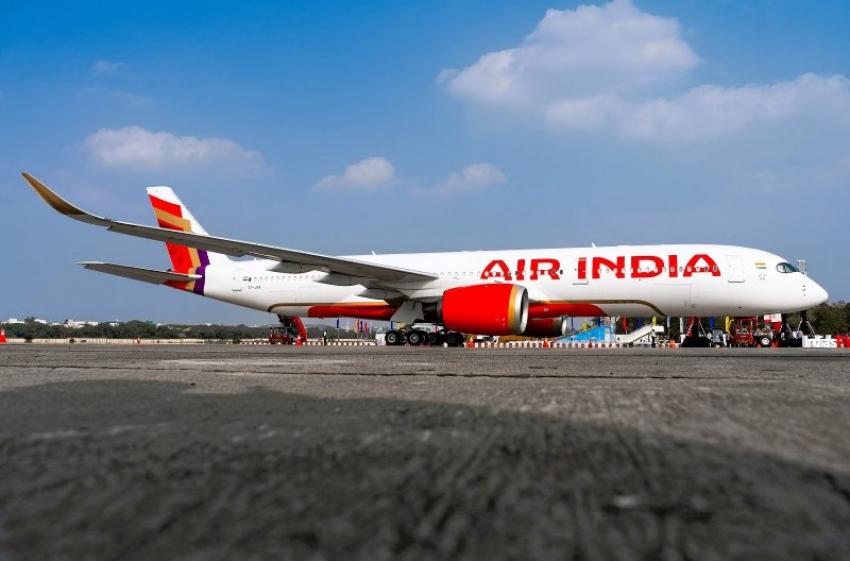
Tata Group-owned Air India and the Ministry of Tourism (MoT), Government of India, have signed a Memorandum of Understanding (MoU) to jointly promote India as a premier global tourism destination and strengthening India’s position as a key aviation and transit hub.
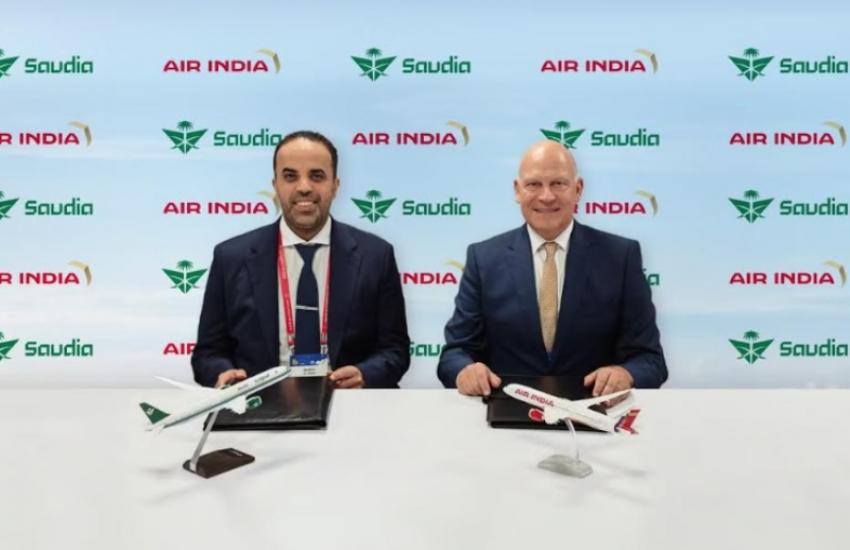
Tata-owned Air India, India’s leading global airline, and Saudia, the national flag carrier of Saudi Arabia, have signed a Memorandum of Understanding (MoU) to expand strategic cooperation between the two airlines.
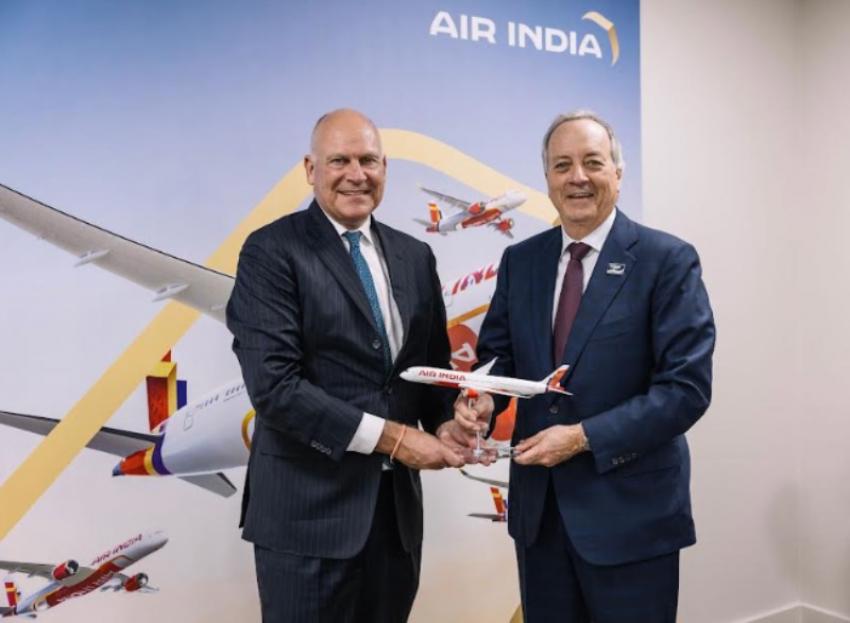
JFK Millennium Partners (JMP), the company selected by the Port Authority of New York & New Jersey to build and operate John F. Kennedy International Airport’s new world-class Terminal 6 (JFK T6), and Air India on Tueday announced that the airline has chosen T6 for its operations beginning in 2028.