
23 Jan 2015, 11:06 am
The partnership emphasizes the companies' shared commitment to sustainable growth.
Maersk Line will undertake to reduce the CO2 emissions of every container it ships on behalf of DB Schenker Logistics between now and 2020 by 20% compared to 2014 levels.
"This is the first agreement between a global logistics services provider and a container shipping company," says Karl-Friedrich Rausch, Chief Sustainability Officer of Deutsche Bahn AG and Management Board Member for Transportation and Logistics at DB Mobility Logistics AG.
"Maersk Line is an important partner for us. Together, we will increase our freight volumes and share responsibility for protecting the climate. The agreement is a milestone because we are incorporating aspects of sustainability into our business relationships," he said.
The objective of the six-year agreement is to fuel customers' interest in sustainable ocean freight on the market by bringing aspects of sustainability into business decision-making processes.
Maersk Line is DB Schenker's preferred partner because Maersk Line invests in state-of-the-art fuel efficient ships and because its service network and ship operation is optimized to meet the highest standards, which reduces polluting emissions overall. In addition, Maersk Line can break down the environmental improvements per container transported.
"The partnership encourages greater transparency on sustainable container transportation which can drive significant sustainability improvements in the industry," says Vincent Clerc, Chief Trade and Marketing Officer in Maersk Line. "By integrating sustainability elements into the purchasing decisions, we jointly strive to change the procurement process in container shipping fundamentally."
- Sona College of Technology's 25th graduation day: 1,325 students receive BE, BTech, ME, MCA, MBA and PhD degrees
- ‘We are the worst storytellers’: Suhel Seth on India’s failure to market itself at 'Kitaab' book launch
- Sona College of Technology welcomes 2,400 freshers to UG, PG programmes
- ‘Children shouldn’t carry the burden’: Social activist Sundeep Bhutoria urges Centre to enforce 10% school bag rule
- When the Body Becomes a Temple: The Ramnami Samaj's Century-Old Rebellion Now Inspires Kolkata's Durga Puja
- From Ramnami tattoos to a global app: Chaltabagan's 'Nishan' takes Durga Puja beyond Kolkata
- 66th Graduation Day: Thiagarajar Polytechnic records 100% placement for graduating batch of 692 across 11 disciplines
- 66th Graduation Day: Thiagarajar Polytechnic records 100% placement for graduating batch of 692 across 11 disciplines
- Three outstanding PhD scholars to receive Rs 1 lakh a year for three years from Valliappa Foundation
- Chaltabagan Durga Puja 2026: Khuti Puja marks new beginning amid Bengal’s political change



IndiGo has announced a new daily nonstop service between Mumbai and Hanoi, beginning October 25, 2026. The new route will expand the airline’s international network and improve connectivity with Vietnam’s capital, giving passengers more options and flexibility for travel between India and Vietnam.

Aviation major Emirates is taking its award-winning Premium Economy experience a step further with the launch of what it describes as the world’s first electrically powered Premium Economy seat, featuring a full-height adjustable privacy screen between every seat.
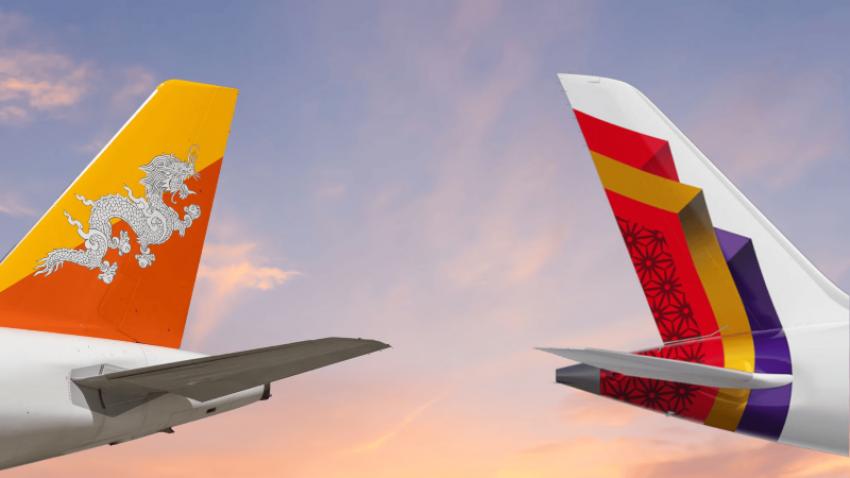
Air India and Drukair, Royal Bhutan Airlines, have entered into an interline partnership to enhance travel convenience and strengthen network connectivity between India, Bhutan, and destinations beyond.