
26 Jan 2017, 06:20 pm
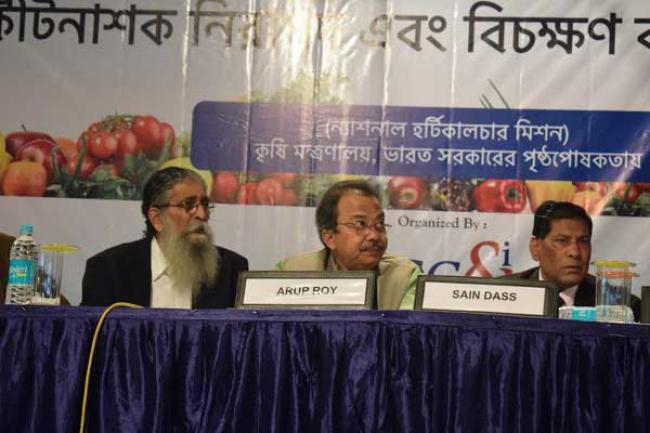
Arup Roy (Hon’ble Minister-in-Charge, Department of Cooperation, Govt. of West Bengal) was present on this occasion.
Satyabrata Mukherjee (Chairperson - Agriculture & Rural Development Committee, The Bengal Chamber); Ajeet Verma (Manager - Seed Production, Hindustan Insecticides Limited); R.K. Mondal (Deputy General Manager, Agriculture & Processed Food Products Export Development Authority - APEDA); Sain Dass (Scientist, Hindustan Insecticides Limited), Pranab Chatterjee (Ex Prof. Bidhan Chandra Krishi Viswavidyalaya) were present among others.
.jpg) Satyabrata Mukherjee (Chairperson - Agriculture & Rural Development Committee, The Bengal Chamber), drew attention towards a wide range of human health hazards caused by unsafe use of pesticide. “It may cause health hazards ranging from short-term impacts such as headaches and nausea to chronic impacts like cancer, reproductive harm, and endocrine disruption. Acute dangers - such as nerve, skin, and eye irritation and damage, headaches, dizziness, nausea, fatigue, and systemic poisoning - can sometimes be dramatic, and even occasionally fatal,” he said.
Satyabrata Mukherjee (Chairperson - Agriculture & Rural Development Committee, The Bengal Chamber), drew attention towards a wide range of human health hazards caused by unsafe use of pesticide. “It may cause health hazards ranging from short-term impacts such as headaches and nausea to chronic impacts like cancer, reproductive harm, and endocrine disruption. Acute dangers - such as nerve, skin, and eye irritation and damage, headaches, dizziness, nausea, fatigue, and systemic poisoning - can sometimes be dramatic, and even occasionally fatal,” he said.
He also advised farmers, “The discharge from the sprayer should be directed away from the body. Leaking equipment should be repaired and the skin should be washed after any accidental contamination.”
.jpg) “Purchase pesticides/bio-pesticides only from registered pesticide dealers having valid license and do not purchase pesticides from unlicensed persons. Special precautions must be taken during transport, storage and handling. Spray equipment should be regularly cleaned and maintained to prevent leaks. People who work with pesticides should receive proper training in their safe use,” said Arup Roy (Hon’ble Minister-in-Charge, Department of Cooperation, Govt. of West Bengal).
“Purchase pesticides/bio-pesticides only from registered pesticide dealers having valid license and do not purchase pesticides from unlicensed persons. Special precautions must be taken during transport, storage and handling. Spray equipment should be regularly cleaned and maintained to prevent leaks. People who work with pesticides should receive proper training in their safe use,” said Arup Roy (Hon’ble Minister-in-Charge, Department of Cooperation, Govt. of West Bengal).
- Project Prayas: Taj Hotels, Prabha Khaitan Foundation turn hospitality floors into learning spaces for young adults with special needs
- Sona College of Technology Fashion Technology students win Ministry of Textiles' Design Innovation Hackathon
- Reliance Industries posts record quarterly revenue of ₹3.4 lakh crore, Jio IPO on the horizon
- Prabha Khaitan Foundation, French Embassy explore deeper Indo-French cultural collaboration
- World Music Day 2026 Concert Writes a New Chapter in Kolkata's Cultural Soul
- Big boost for UPI: India’s digital payment system expands to Cambodia
- India at Cannes 2026: Glitter on the Croisette, But Where Is the Cinema?
- Sona College announces admissions to BTech in Computer Science, IT, AI-ML & Data Science
- NEET-UG to shift to Computer-Based test mode from 2027, says Dharmendra Pradhan; experts welcome move
- Sona College of Technology launches ‘Sona ChipIN Centre’ with latest semiconductor EDA tools



Tata Group-owned Air India and the Ministry of Tourism (MoT), Government of India, have signed a Memorandum of Understanding (MoU) to jointly promote India as a premier global tourism destination and strengthening India’s position as a key aviation and transit hub.
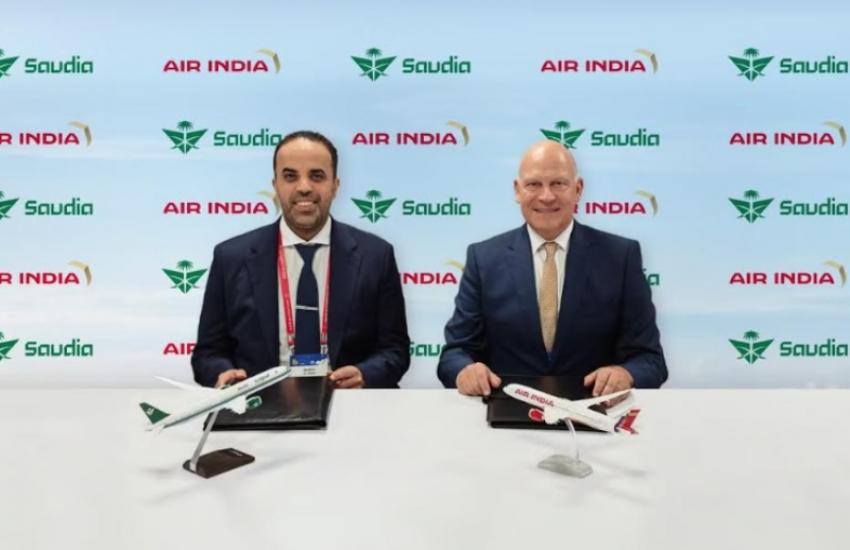
Tata-owned Air India, India’s leading global airline, and Saudia, the national flag carrier of Saudi Arabia, have signed a Memorandum of Understanding (MoU) to expand strategic cooperation between the two airlines.
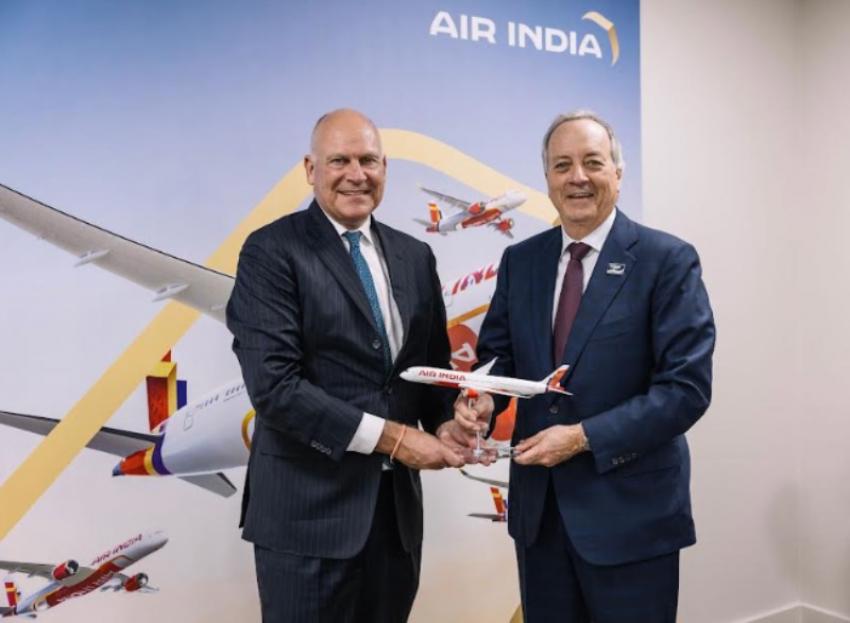
JFK Millennium Partners (JMP), the company selected by the Port Authority of New York & New Jersey to build and operate John F. Kennedy International Airport’s new world-class Terminal 6 (JFK T6), and Air India on Tueday announced that the airline has chosen T6 for its operations beginning in 2028.