
NITN | @notintownlive | 25 Aug 2017, 09:36 am
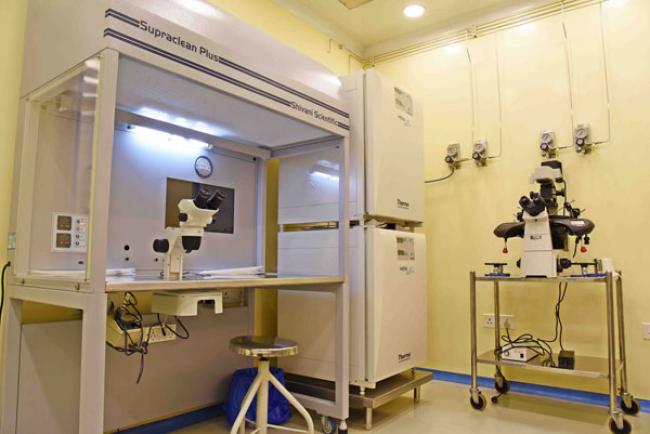
ASIC is a well-known body for performing quality audits in the health care industry.
The objectives of the ASIC standard for IVF clinics are -- to create measurable and practical standards for IVF centers in terms of infrastructure and equipment, follow standard operating procedures for IVF centers, assist doctors in creation of a safe and Infection-free environment and lastly to enhance patient safety and make the processes more user friendly.
Dr Rajeev Agarwal, Clinical Director Care IVF said, “Care IVF has always felt the need to be at par with the international community in maintaining the best standards and has adopted standard operation protocols conforming to the practices followed globally to ensure the best of results."
"The ASIC auditing was extensive, and covered not just the laboratory and medical management areas but also patient safety, disaster management, patient relations, grievance handling, counseling, administrative and HR protocols. The ASIC certification proved that that the clinic was already 99% prepared and the audit helped us improve and achieve 100% benchmark," said Dr Agarwal.
All IVF clinics in India are required to be registered with the National Registry for IVF Clinics and Assisted Reproductive Technology (ART) banks managed by the Indian Council of Medical Research (ICMR), the body that regulates the Indian fertility industry and follow the clinical guidelines laid down by the Council.
With the fast expanding fertility care industry, there was an overwhelming need for a proper accreditation system for ART clinics that would help standardize the protocols and make them user friendly and safe, according to most medical experts in the field.
The fertility industry thus formed its own regulatory body of sorts, under the aegis of the Indian Society of Assisted Reproduction (ISAR) whose objectives are to assimilate all information, facilitate academic/ research collaboration and unrestricted transfer of data, formulate standard practices and contribute to advancement of research in the field of ART.
Since an audit conducted directly by ISAR may run the risk of being predisposed, ASIC was roped in as an arbiter to carry out auditing and accrediting process for the IVF clinics in a fair and unbiased manner.
- Manicktala Chaltabagan Lohapatty Durga Puja Committee wins numerous Awards as ‘Nishan’ theme captures hearts
- Bengal Guv R. N. Ravi inaugurates Chaltabagan Lohapatty Durga Puja’s 84th edition ‘Nishan — The Mark’
- Sundeep Bhutoria brings Bengal’s Mahalaya to the nation in Hindi – Mahishasur Mardini ki Gatha
- VeeCycle Works Signs MoU with AP Govt for Rs 150 Cr Recycling Project in Visakhapatnam
- Kolkata culturist Sundeep Bhutoria inaugurates India National Stand at Frankfurt Book Fair 2026
- Where governments stop, institutions begin: Culture Minister Shekhawat salutes Prabha Khaitan Foundation
- National Award-winning ‘Ramnami’ puts spotlight on community behind Chaltabagan’s ‘Nishan’ theme
- Thiagarajar Polytechnic College receives Education Excellence Award for the fifth time
- Sona College of Technology's 25th graduation day: 1,325 students receive BE, BTech, ME, MCA, MBA and PhD degrees
- ‘We are the worst storytellers’: Suhel Seth on India’s failure to market itself at 'Kitaab' book launch



In an effort to revive the joy of handwritten communication in an increasingly digital world, the Department of Posts under the Ministry of Communications, in collaboration with IndiGo, organised a unique Digital Detox Campaign on October 12, observed as Philately Day during the ongoing National Postal Week celebrations from October 9 to 15.

Singapore Airlines (SIA) is upgrading its in-flight entertainment system, KrisWorld, with new display technology, audio features, personalisation tools and high-speed internet connectivity. The changes are intended to give passengers more control over their entertainment and how they use their time on board.

Air India will launch non-stop flights between Delhi and Osaka’s Kansai International Airport on 2 February 2027, becoming the only airline to operate on the route. The airline will run four flights a week between the Indian capital and Osaka, Japan’s second-largest metropolitan area, using Boeing 787-8 aircraft.