
NITN | @notintownlive | 10 Apr 2018, 10:28 am
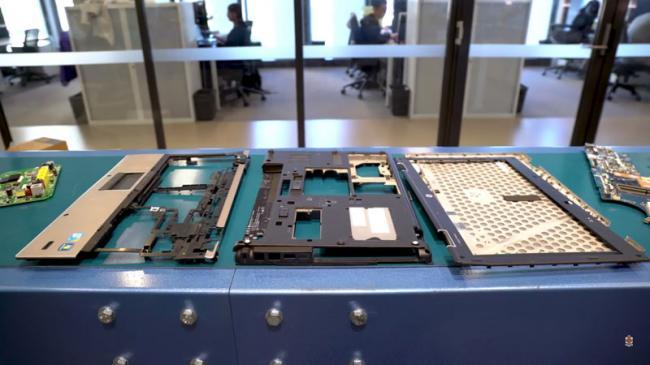
Sydney, Apr 10 (IBNS): As Australia's waste crisis escalates, Professor Veena Sahajwalla has launched the world's first e-waste microfactory which has the potential to reduce the vast amount of electronic waste heading into landfill.
The world’s first microfactory that can transform the components from electronic waste (e-waste) items such as discarded smart phones and laptops into valuable materials for re-use has been launched at UNSW, Sydney.
Using technology developed following extensive scientific research at UNSW’s Centre for Sustainable Materials Research and Technology (SMaRT Centre), the e-waste microfactory has the potential to reduce the rapidly growing problem of vast amounts of electronic waste causing environmental harm and going into landfill.
In launching the microfactory at the SMaRT Centre laboratories today, NSW Minister for the Environment Gabrielle Upton said it was exciting to see technological innovations that could transform waste management and recycling.

“I am very pleased to launch the UNSW e-waste microfactory today, a NSW home-grown solution to the waste challenges facing communities all over the world,” Upton said.
“It is exciting to see innovations such as this prototype microfactory and the potential they have to reduce waste and provide a boost to both the waste management and manufacturing industries in NSW.”

SMaRT Centre Director, Professor Veena Sahajwalla, said the e-waste microfactory was the first of a series of microfactories under development and in testing at UNSW that can also turn many types of consumer waste such as glass, plastic and timber into commercial materials and products.
For instance, from e-waste, computer circuit boards can be transformed into valuable metal alloys such as copper and tin while glass and plastic from e-devices can be converted into micromaterials used in industrial grade ceramics and plastic filaments for 3D printing.
“Our e-waste microfactory and another under development for other consumer waste types offer a cost-effective solution to one of the greatest environmental challenges of our age, while delivering new job opportunities to our cities but importantly to our rural and regional areas, too,” Professor Sahajwalla said.

“Using our green manufacturing technologies, these microfactories can transform waste where it is stockpiled and created, enabling local businesses and communities to not only tackle local waste problems but to develop a commercial opportunity from the valuable materials that are created.”
Professor Sahajwalla said microfactories presented a solution to burning and burying waste items that contain materials which can be transformed into value-added substances and products to meet existing and new industry and consumer demands. This was a truly sustainable solution to our growing waste problem, she said, while offering economic benefits available to local communities.
“We have proven you can transform just about anything at the micro-level and transform waste streams into value-added products. For example, instead of looking at plastics as just a nuisance, we’ve shown scientifically that you can generate materials from that waste stream to create smart filaments for 3D printing,” she said.
“These microfactories can transform the manufacturing landscape, especially in remote locations where typically the logistics of having waste transported or processed are prohibitively expensive. This is especially beneficial for the island markets and the remote and regional regions of the country.”
 UNSW has developed the technology with support from the Australian Research Council and is now in partnership with a number of businesses and organisations including e-waste recycler TES, mining manufacturer Moly-Cop, and Dresden which makes spectacles.
While the SMaRT Centre is expanding its partnerships with industry, investors and local councils, the challenge is to commercialise and create incentives for industry to take up this technology – and to change behaviour – as societies and communities around the world seek to be more sustainable.
- Manicktala Chaltabagan Lohapatty Durga Puja Committee wins numerous Awards as ‘Nishan’ theme captures hearts
- Bengal Guv R. N. Ravi inaugurates Chaltabagan Lohapatty Durga Puja’s 84th edition ‘Nishan — The Mark’
- Sundeep Bhutoria brings Bengal’s Mahalaya to the nation in Hindi – Mahishasur Mardini ki Gatha
- VeeCycle Works Signs MoU with AP Govt for Rs 150 Cr Recycling Project in Visakhapatnam
- Kolkata culturist Sundeep Bhutoria inaugurates India National Stand at Frankfurt Book Fair 2026
- Where governments stop, institutions begin: Culture Minister Shekhawat salutes Prabha Khaitan Foundation
- National Award-winning ‘Ramnami’ puts spotlight on community behind Chaltabagan’s ‘Nishan’ theme
- Thiagarajar Polytechnic College receives Education Excellence Award for the fifth time
- Sona College of Technology's 25th graduation day: 1,325 students receive BE, BTech, ME, MCA, MBA and PhD degrees
- ‘We are the worst storytellers’: Suhel Seth on India’s failure to market itself at 'Kitaab' book launch


Qatar Airways has entered into a new codeshare agreement with Porter Airlines, expanding its connections across Canada.

Emirates will mark Diwali on November 7 and 8 with traditional Indian sweets and festive food offerings for passengers travelling between Dubai and nine Indian destinations: Ahmedabad, Bengaluru, Kochi, Chennai, Delhi, Hyderabad, Thiruvananthapuram, Kolkata and Mumbai.

Qatar Airways has launched a twice-weekly service connecting Doha with Caracas in Venezuela and Bogotá in Colombia. With this launch, the airline becomes the first Gulf carrier to serve Venezuela and the first airline to operate non-stop flights from the Middle East to both Caracas and Bogotá.