
NITN | @notintownlive | 13 Jun 2026, 12:00 am
 DigiYatra
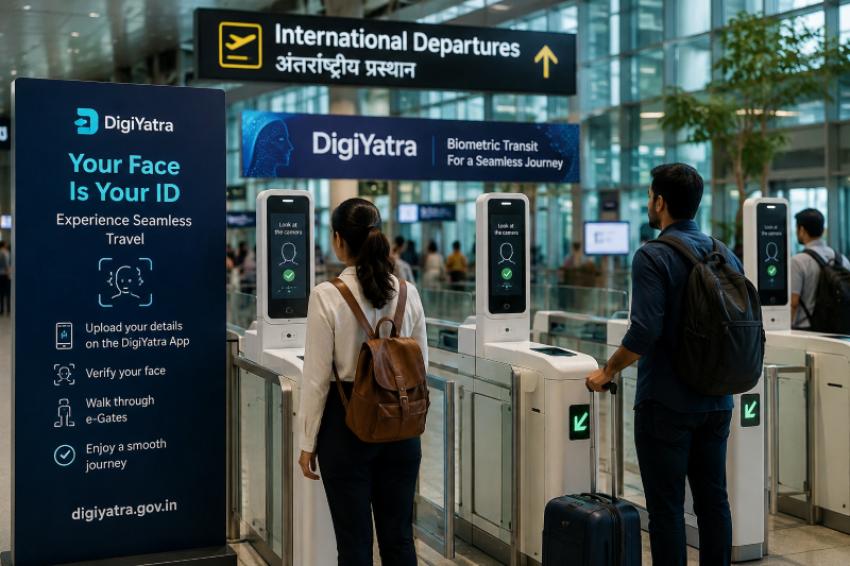
DigiYatra transit system aims to reduce queues at key airport checkpoints. Photo: generated by ChatGPT
The Ministry of Civil Aviation has introduced mandatory DigiYatra biometric transit for Indian passengers travelling internationally through four major airports – Delhi, Mumbai, Bengaluru, and Hyderabad. The new system came into effect on June 1, 2026, and is aimed at making passenger movement faster and more seamless through the use of facial recognition technology.
Under DigiYatra, a passenger's face acts as a digital identity token, reducing the need for repeated document checks at various stages of the airport journey. Instead of repeatedly scanning boarding passes, travellers can move through designated checkpoints using biometric verification.
How the DigiYatra transit process works
- Passengers are required to upload an Aadhaar-verified selfie and their boarding pass to the DigiYatra app at least 48 hours before departure.
- There is, however, an important catch. Since a boarding pass is needed for the process, travellers will first have to secure a confirmed seat with their airline. In many cases, this may require paying an additional fee for seat selection before the boarding pass can be generated and uploaded.
- Upon arrival at Delhi, Mumbai, Bengaluru, or Hyderabad airports, passengers can use dedicated biometric e-gates.
- Facial recognition cameras will match the traveller's live image with an encrypted biometric template stored in the DigiYatra cloud.
- Once the identity is successfully verified, access to the international transit corridor will be granted automatically.
- Passengers will no longer need to repeatedly scan paper boarding passes during the transit process.
- The system is expected to speed up passenger movement and reduce congestion at key checkpoints within the airport.
The move marks another step in India's push towards paperless and technology-driven air travel. By replacing multiple rounds of manual verification with a single biometric identity, authorities hope to streamline the transit experience at some of the country's busiest airports.
For Indian travellers using these airports for international journeys, understanding the DigiYatra process in advance could help avoid last-minute confusion and ensure a smoother transit experience.
- Flying Abroad From India? Here's How the New DigiYatra Transit System Works
- Amsterdam plans huge tourist tax hike — Visitors could soon pay up to 20 percent
- Germany waives airport Transit Visa requirement for Indian nationals from June 3
- Anand Mahindra amazed by Vande Bharat's journey across Chenab Rail Bridge
- Passengers urged to document luggage amid Canadian airport drug-tag scheme
- South Africa Goes Visa-Free for Indians, But There’s a Catch
- From War Risks to Medical Bills: Why Indian Travellers Need Better Travel Insurance
- Beyond Books – A College Street Heritage Walk to Trace Kolkata’s Literary and Academic Legacy
- Rare Pahari Art from India’s Himalayas Finds a Home at Smithsonian Museum
- Dubai Unveils Its First Fully Private Beach for Women



Air India and Riyadh Air have signed a Memorandum of Understanding (MoU) as they look to strengthen links between their networks and offer travellers more convenient connections between India, Saudi Arabia and destinations beyond.

Qatar Airways has launched a Boeing 777 aircraft featuring a special FIFA World Cup 2026 livery, reflecting its ongoing association with FIFA. The aircraft has been unveiled ahead of the tournament and highlights the airline's role in connecting fans, teams, and football communities around the world.

Air India Express announces the launch of its ‘Xpress Sale,’ offering 5 million seats with savings of up to 50% on Lite (Zero Check-in Baggage) and Value fares across its domestic and international network.