
NITN | @notintownlive | 11 Aug 2020, 06:15 am
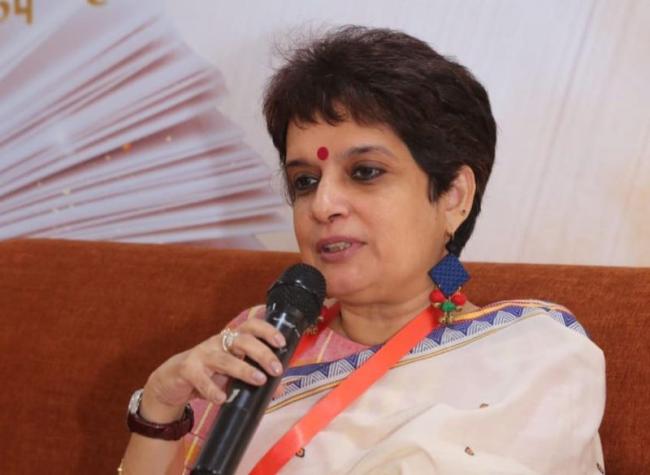
Author Kavita Kane, who is credited for mythological fictions like 'The Karna's Wife', 'Sita's Sister', was the guest at a virtual An Author's Afternoon session organised by Prabha Khaitan Foundation and presented by Shree Cement on Jul 28. India Blooms correspondent Souvik Ghosh brings excerpts of an interaction where Kavita spoke about the blending of literature and epics
I would like to know about your book 'Sita's Sister'. It was the first book to be published right?
No. 'The Karna's Wife' was the first to be published but initially I wanted to write about Urmila (Sita's sister) i.e. the book 'Sita's Sister'. Then I realised I couldn't as there was no material in her. That was extremely discouraging. I was wondering whether I should go on with the book or not. There was a huge moral dilemma. Then I thought about the second most favourite character, that was Karna of course. So that's how 'Karna's Wife' came to me. Actually the success of 'Karna's Wife' gave me the courage to go back to Urmila and sort of flesh out a story.
.jpg)
What had set Urmila as the strongest leader of Janak in your eyes?
I think she was the leader because she took the responsibility of the palace when the three people (Ram, Lakshman and Sita) were not there. I was just imagining what life would have been when Ram, Lakshman and Sita were not there. It was absolutely a broken family. So the whole thing of how she (Urmila) holds the family caught her as a leader in my eyes. She was like a silent strength and fortitude. We have only seen her sufferings but I think there is a lot of courage and conviction in her.
Karna's second wife is known as Supriya to us. But you have called her Urubi in your book. So where does Urubi come from?
Supriya itself was a fictitious character. I made her from a Tamil folklore. I just related one folklore to the other and made the character.
.jpg)
What is your research methodology? What do you go through while building up the fictional characters?
Now the research has become a pattern. I sort of try to draw from whatever I can from the bigger characters (original characters) and the events around them. I used to read folklore. Folklores are extremely illuminating because I think they illuminise the characters and give certain humility to them. 70 percent of my books are based on fiction.
Books based on mythology are bringing the epics close to the present generation. But do we run a risk of creating a situation where people may mistake fiction as mythological facts?
The fiction cannot be a mythological fact because they are alternative perspectives. So one has to go back to the original (books or text). Readers must go back to the original and find out what the story is all about. I made Urmila as the protagonist instead of Sita in my book so that the readers will have to realise and go back to the original text.
While I am making a fiction, I stick to the original as much as possible because first of all, they are not my characters and secondly, I don't want my readers to think my characters are completely different from the original ones.
.jpg)
So literature and epics have always had a symbiotic relationship. Literature has always used the ancient texts as a way of telling a story with a moral and a philosophical depth because that is what the stories are actually about.
- Sona College of Technology's 25th graduation day: 1,325 students receive BE, BTech, ME, MCA, MBA and PhD degrees
- ‘We are the worst storytellers’: Suhel Seth on India’s failure to market itself at 'Kitaab' book launch
- Sona College of Technology welcomes 2,400 freshers to UG, PG programmes
- ‘Children shouldn’t carry the burden’: Social activist Sundeep Bhutoria urges Centre to enforce 10% school bag rule
- When the Body Becomes a Temple: The Ramnami Samaj's Century-Old Rebellion Now Inspires Kolkata's Durga Puja
- From Ramnami tattoos to a global app: Chaltabagan's 'Nishan' takes Durga Puja beyond Kolkata
- 66th Graduation Day: Thiagarajar Polytechnic records 100% placement for graduating batch of 692 across 11 disciplines
- 66th Graduation Day: Thiagarajar Polytechnic records 100% placement for graduating batch of 692 across 11 disciplines
- Three outstanding PhD scholars to receive Rs 1 lakh a year for three years from Valliappa Foundation
- Chaltabagan Durga Puja 2026: Khuti Puja marks new beginning amid Bengal’s political change
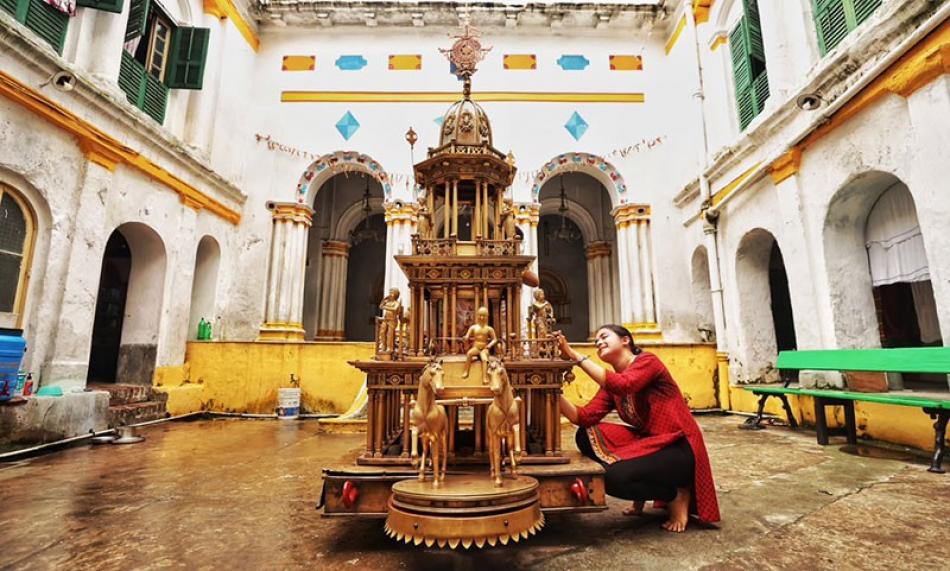


IndiGo has announced a new daily nonstop service between Mumbai and Hanoi, beginning October 25, 2026. The new route will expand the airline’s international network and improve connectivity with Vietnam’s capital, giving passengers more options and flexibility for travel between India and Vietnam.
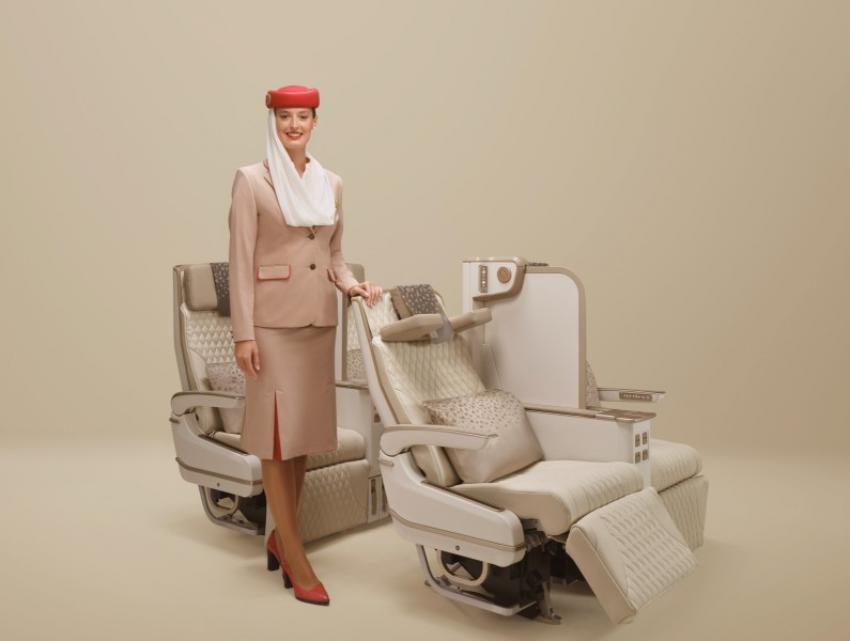
Aviation major Emirates is taking its award-winning Premium Economy experience a step further with the launch of what it describes as the world’s first electrically powered Premium Economy seat, featuring a full-height adjustable privacy screen between every seat.

Air India and Drukair, Royal Bhutan Airlines, have entered into an interline partnership to enhance travel convenience and strengthen network connectivity between India, Bhutan, and destinations beyond.