
NITN | @notintownlive | 25 Apr 2023, 03:29 am
 Sona College of Technology
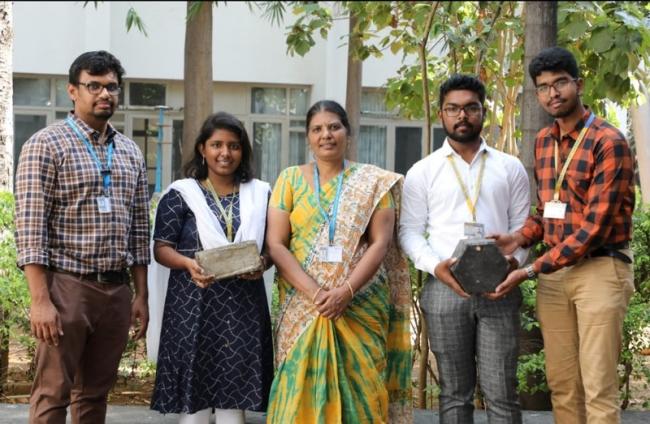
Salem/Tamil Nadu: A group of engineering students at Sona College of Technology have developed a technique to convert discarded Personal Protective Equipment (PPE) from hospitals, which usually contributes to landfill waste, into bricks that are more durable and do not require cement.
These poly bricks have a compressive strength that is three times greater than that of conventional red bricks, are significantly lighter, and can be produced much more quickly.
The poly bricks meet the ISO standards for curing time, which is less than 24 hours, making them cheaper and faster to produce than regular red or concrete hollow bricks.
Additionally, they fulfill the required specifications for water absorption.
A team of civil engineering students from Sona College of Technology in Salem won a prize of Rs. 100,000 in the All India Council for Technical Education (AICTE) Smart India Hackathon held in Jaipur, competing against 25 other teams, by presenting a functional model for creating poly bricks.
The process of producing these bricks involves sterilizing PPE kits with ultraviolet (UV) rays, heating them to 160 degrees Celsius, adding sand aggregates, and molding the polypropylene mass into bricks.
Dr. N Karuppasamy, an Assistant Professor of Civil Engineering at Sona College of Technology, who provided guidance to the team, stated that a patent application has been submitted for this technology.
A team of five civil engineering students from Sona College in Salem have developed eco-friendly poly bricks that do not require cement or water in the production process and cause minimal in-process emissions, as PPE plastic waste is subjected to less than 200 degrees Celsius.
The production of these bricks completely eliminates the use of cement, which in turn eliminates carbon emissions generated during cement production.
The World Health Organization (WHO) released a report in February 2022 highlighting the environmental burden caused by the use of single-use PPE kits during the COVID-19 pandemic.
This medical waste, including polypropylene plastic PPE kits and surgical masks, places a significant strain on waste management systems.
The civil engineering student team from Sona College, led by their mentor Dr. R Malathy, Dean (R&D) and Professor of Civil Engineering, set out to find an innovative method to manage the thousands of tonnes of waste generated by discarded PPE kits in hospitals.
They aimed to create wealth from this hazardous waste, adding another dimension to their project.
Aravind Kumar, Kamalesh J B, and Dharani Raj U, all in their final and third years, respectively, and Adhavan P and Harshini E K, both in their second year, developed this solution while participating in a nationwide competition to find an effective method to tackle the improper disposal of COVID-19 personal protection equipment, which adds to the single-use plastic problem faced by city authorities.
The Covid-19 pandemic gave rise to the technology behind these eco-friendly poly bricks, taking into account the significant amount of PPE waste generated.
According to data from the Ministry of Environment, Forest and Climate Change, the Indian government generated nearly 56,000 tonnes of PPE waste in one year, in addition to the waste generated by hospitals and healthcare providers during their regular operations.
These environmentally friendly bricks can be used as regular bricks for walls or as paver blocks, replacing traditional red bricks and reducing plastic waste and pollution caused by cement production.
The poly bricks have good cement adhesion and can be plastered with cement.
While cement use is common in construction, the production of poly bricks and paver blocks from PPE waste with no water or cement reduces water wastage, harmful emissions, and water contamination from microplastics.
Furthermore, the Civil Engineering Department has patented a technology that uses plastic waste to produce bricks, replacing nearly 70% of sand with plastic.
- Sona College of Technology's 25th graduation day: 1,325 students receive BE, BTech, ME, MCA, MBA and PhD degrees
- ‘We are the worst storytellers’: Suhel Seth on India’s failure to market itself at 'Kitaab' book launch
- Sona College of Technology welcomes 2,400 freshers to UG, PG programmes
- ‘Children shouldn’t carry the burden’: Social activist Sundeep Bhutoria urges Centre to enforce 10% school bag rule
- When the Body Becomes a Temple: The Ramnami Samaj's Century-Old Rebellion Now Inspires Kolkata's Durga Puja
- From Ramnami tattoos to a global app: Chaltabagan's 'Nishan' takes Durga Puja beyond Kolkata
- 66th Graduation Day: Thiagarajar Polytechnic records 100% placement for graduating batch of 692 across 11 disciplines
- 66th Graduation Day: Thiagarajar Polytechnic records 100% placement for graduating batch of 692 across 11 disciplines
- Three outstanding PhD scholars to receive Rs 1 lakh a year for three years from Valliappa Foundation
- Chaltabagan Durga Puja 2026: Khuti Puja marks new beginning amid Bengal’s political change

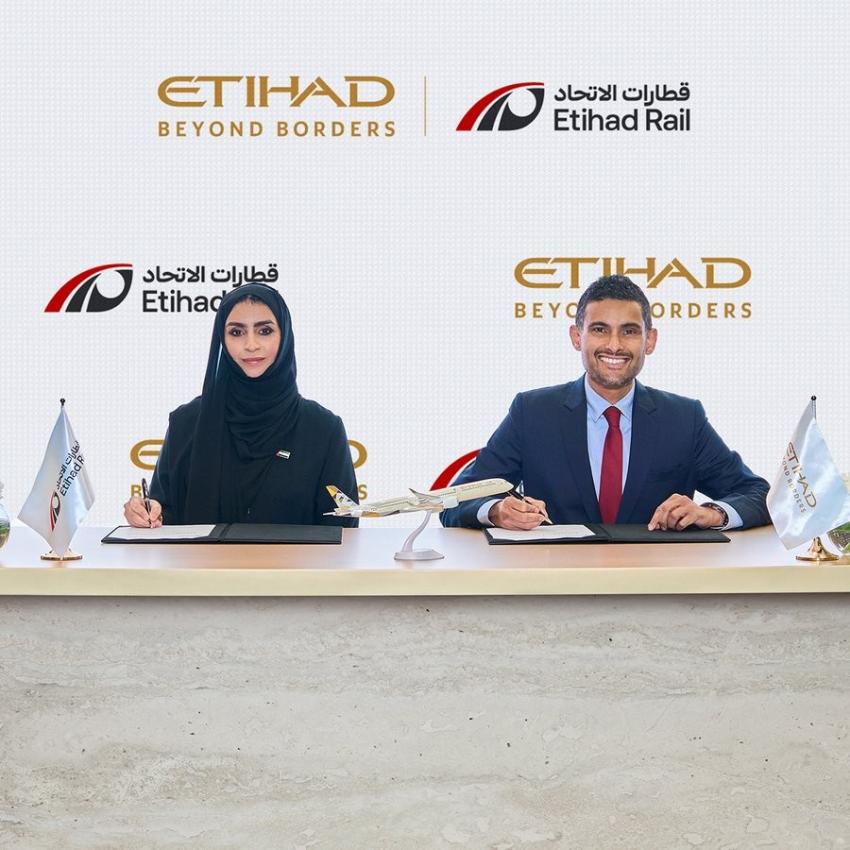
Etihad Airways and Etihad Rail have signed a Memorandum of Understanding to explore integrated air-rail travel services across the United Arab Emirates, aiming to make travel between Abu Dhabi and destinations across the country more convenient.

IndiGo has announced a new daily nonstop service between Mumbai and Hanoi, beginning October 25, 2026. The new route will expand the airline’s international network and improve connectivity with Vietnam’s capital, giving passengers more options and flexibility for travel between India and Vietnam.
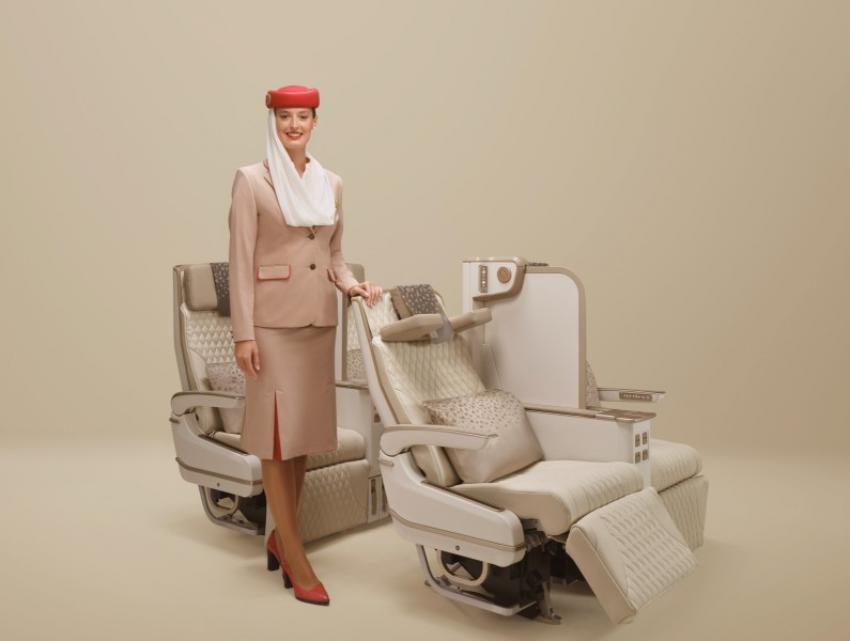
Aviation major Emirates is taking its award-winning Premium Economy experience a step further with the launch of what it describes as the world’s first electrically powered Premium Economy seat, featuring a full-height adjustable privacy screen between every seat.