
NITN | @notintownlive | 16 Nov 2024, 04:35 am
 Rotary
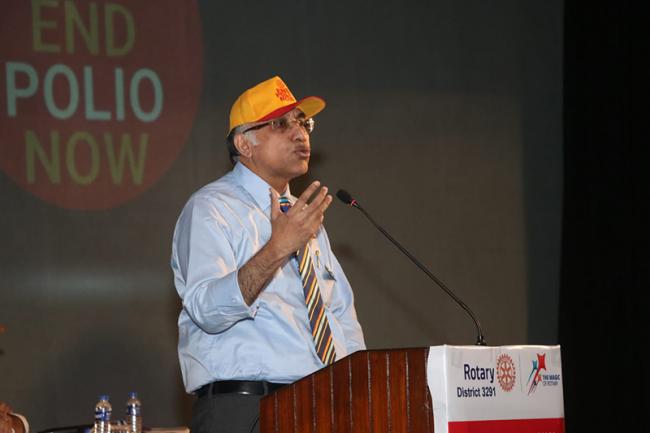
Rotary International District 3291 and District Polio Plus Committee recently organized a program at Gyan Manch in Kolkata to observe World Polio Day.
The World Polio Day is observed globally by the Rotary International on 24th October every year.
The program was held in the auditorium with representation from various schools under the aegis of Rotary Community Corps, members of the stakeholders and members of Rotary Clubs.
The takeaway from the 3-hour-long seminar was the need to be vigilant, increase awareness through advocacy and of course at the grass root level the urgent need to sensitize and immunize children to avoid any recurrence as India is bordered by Pakistan, which has active polio cases as well as Afghanistan which has been experiencing a growth in number of wild polio cases.
The speakers included Rotary International Director, Anirudha Roychowdhury, District Governor Dr Krishnendu Gupta, Past District Governor & End Polio Now Coordinator Uttam Ganguli, Past District Governor & Indian National Polio Plus Committee AdHoc Committee Member Shyamashree Sen, District Polio Plus Committee Chairman & District Governor Nominee Tapas Bhattacharya along with Dr. Papri Nayak, Additional Director of Health Immunisation, Govt 0f WB, Dr Vandana P Bhatia, Health Specialist, UNICEF and Dr Amitava Sarkar, State SMO, WHO who spoke on their respective roles and programs.
World Polio Day on 24th October holds special significance for India, a country that was once considered the epicentre of the global polio crisis.
India reported its last polio case on January 13, 2011, from Howrah, West Bengal.
Since then, the country has remained vigilant to prevent the reintroduction of the virus, especially given its high population density and close proximity to countries where polio is still endemic.
The alarming figures discussed about the rise and literal comeback of wild polio virus (WPV) showed that at present WPV are 62 with 39 in Pakistan and 23 in Afghanistan whereas in 2023 it was 12 and in 2022 it was 30.
In 2021 the figures were at an all time low at 6.
Keeping in mind the above, speakers deliberated on the following key points:
Importance of Vigilance in India
Although India was declared polio-free by the WHO in 2014, continued vigilance is critical due to:
• Regional Threats: Neighboring countries like Pakistan and Afghanistan still report polio cases, raising the risk of cross-border transmission.
• Population Mobility: Large-scale migration and travel increase the risk of polio virus importation.
• Children’s Immunity: A new generation of children needs to be vaccinated regularly to ensure immunity against the virus.
Steps Taken by Various Organizations
1. Government of India:
Pulse Polio Immunization (PPI): The government has been organizing massive national immunization days to ensure that every child under the age of five is immunized.
Surveillance Systems: An extensive network of surveillance for Acute Flaccid Paralysis (AFP) cases is in place to detect any polio-like symptoms and respond swiftly.
Border Vaccination Programs: Special immunization drives are conducted at border crossings to prevent cross-border transmission of the virus.
2. Government of West Bengal:
West Bengal, particularly Howrah (where the last polio case was reported), has enhanced its public health monitoring systems.
Health Camps and Awareness Campaigns: Regular health camps, vaccination drives, and awareness programs are organized in both urban and rural areas to ensure the immunization process continues smoothly.
UNICEF:
Awareness Campaigns: UNICEF has been instrumental in creating large-scale public awareness about the importance of polio vaccination, using mass media and community-based interventions to reach even the most remote areas.
Community Engagement: UNICEF works with grassroots organizations to engage communities and ensure they understand the importance of vaccinating children.
WHO:
Technical Support: WHO has been providing technical support for surveillance, monitoring, and training health workers in India.
Laboratory Networks: WHO maintains a robust laboratory network across India to detect any polio virus strains from AFP cases.
Monitoring Immunization Coverage: WHO conducts regular monitoring of immunization coverage and works with health authorities to fill gaps.
Rotary Polio Plus Committee:
Polio Eradication Campaigns: Rotary's Polio Plus initiative has played a significant role in mobilizing resources and volunteers for India's polio eradication efforts. Rotary members have been working closely with health authorities to ensure the success of national immunization days.
Global Advocacy: Rotary continues to work with international partners like the Bill & Melinda Gates Foundation to fund and support polio eradication globally.
Innovative Solutions: Rotary promotes the use of innovative technologies like GPS tracking for health workers to ensure they reach every child.
Why India Must Remain Vigilant
• Polio Still Exists: Although polio cases have drastically reduced worldwide, the virus still exists in a few countries. Reintroduction could happen if India lets its guard down.
• Repopulation of Children: Every year, millions of children are born in India who need to be vaccinated to maintain the population’s immunity levels.
• Immunity Gaps: In some areas, particularly in hard-to-reach regions, there might still be gaps in immunization coverage.
India’s successful fight against polio is a global health milestone, but the journey isn’t over. Maintaining high levels of immunization, surveillance, and preparedness will ensure that India remains polio-free.
- Big boost for UPI: India’s digital payment system expands to Cambodia
- India at Cannes 2026: Glitter on the Croisette, But Where Is the Cinema?
- Sona College announces admissions to BTech in Computer Science, IT, AI-ML & Data Science
- NEET-UG to shift to Computer-Based test mode from 2027, says Dharmendra Pradhan; experts welcome move
- Sona College of Technology launches ‘Sona ChipIN Centre’ with latest semiconductor EDA tools
- Parampara founder Debabrata Sen brings Ayurveda to Gen Z with interactive session at Kolkata school
- Sona Institutions to open a College of Nursing at Salem
- Vee Technologies’ engineering division delivers 3,000th fire truck design for the US
- Jagannath comes to Kolkata: Up to 10 lakh devotees expected at Vishwashanti Mahayagya from April 17
- New Sheriff Goutam Ghose to unlock Kolkata's buried colonial past — records untouched since the East India Company


Air India and Riyadh Air have signed a Memorandum of Understanding (MoU) as they look to strengthen links between their networks and offer travellers more convenient connections between India, Saudi Arabia and destinations beyond.

Qatar Airways has launched a Boeing 777 aircraft featuring a special FIFA World Cup 2026 livery, reflecting its ongoing association with FIFA. The aircraft has been unveiled ahead of the tournament and highlights the airline's role in connecting fans, teams, and football communities around the world.

Air India Express announces the launch of its ‘Xpress Sale,’ offering 5 million seats with savings of up to 50% on Lite (Zero Check-in Baggage) and Value fares across its domestic and international network.