
06 Jan 2017, 07:21 am
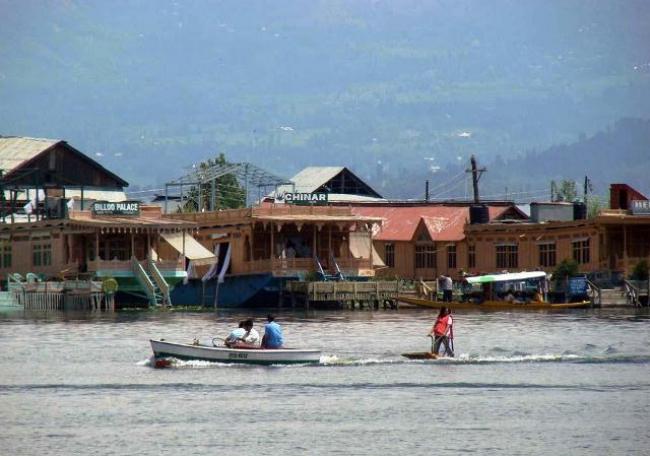
The research paper titled 'Jammu & Kashmir and Xinjiang Uyghur Autonomous Region - A Study in Contrasts' was released last month by IFRAS.
The paper, while drawing parallels between the provinces of Jammu & Kashmir (J&K) and Xinjiang Uyghur Autonomous Region (XUAR), highlights how the Indian and Chinese governments have adopted distinctly different approaches and methods to deal with comparable challenges in the two regions.
Enumerating similarities, namely a Muslim-majority local population, extremism, cross-border terrorism emanating from Pakistan and the disputed border, the paper concludes that as compared to XUAR, J&K today enjoys far greater political autonomy.
.jpg) Despite special political status granted to the two regions, the study highlights that while China's Regional Ethnic Autonomy Law has proven largely ineffective in ensuring true self-governance by ethnic groups like the Uyghurs, the people of J&K have been provided guarantees under Article 370 of the Indian Constitution, and a strong foundation to build a system of local governance.
Despite special political status granted to the two regions, the study highlights that while China's Regional Ethnic Autonomy Law has proven largely ineffective in ensuring true self-governance by ethnic groups like the Uyghurs, the people of J&K have been provided guarantees under Article 370 of the Indian Constitution, and a strong foundation to build a system of local governance.
The study also observes that though the issues confronting the Indian government vis-à-vis cross-border terrorism, separatism and the dispute with Pakistan over Kashmir, are more complex as compared to the problems faced by China in XUAR, the response of the Chinese government and its security forces against the Uyghurs has been far more overwhelming and disproportional.
The paper concludes that India has not imposed the kind of stringent controls on Muslims of the Kashmir Valley as China has done in Xinjiang, noting instead that India has gone to great lengths to protect the Kashmiri tradition, culture, and religion, unlike China that has, over the years, carried out a systematic policy of mass migration of Han Chinese to XUAR, besides cracking down on the observance of Uyghur religion, customs, practices, language and culture in Xinjiang.
.jpg) Started in 2011, The International Forum For Rights And Security (IFFRAS) is a non-profit international think-tank with headquarters in Toronto, Canada and offices in Brussels, Geneva, Ottawa and Washington.
Started in 2011, The International Forum For Rights And Security (IFFRAS) is a non-profit international think-tank with headquarters in Toronto, Canada and offices in Brussels, Geneva, Ottawa and Washington.
IFFRAS is currently chaired by legal scholar and Canadian Member of Parliament (MP) Mario Silva.
Mr Silva has an expertise in international law with his doctoral thesis based on the riveting topic of ‘failed states’. He is active in the arena of human rights and has been working towards combating social ills like anti-semitism and is also a staunch advocate of holocaust education.
Image Sources: PIB, Wikipedia Creative Commons and Kashmir Wallpapers
- Sona College of Technology's 25th graduation day: 1,325 students receive BE, BTech, ME, MCA, MBA and PhD degrees
- ‘We are the worst storytellers’: Suhel Seth on India’s failure to market itself at 'Kitaab' book launch
- Sona College of Technology welcomes 2,400 freshers to UG, PG programmes
- ‘Children shouldn’t carry the burden’: Social activist Sundeep Bhutoria urges Centre to enforce 10% school bag rule
- When the Body Becomes a Temple: The Ramnami Samaj's Century-Old Rebellion Now Inspires Kolkata's Durga Puja
- From Ramnami tattoos to a global app: Chaltabagan's 'Nishan' takes Durga Puja beyond Kolkata
- 66th Graduation Day: Thiagarajar Polytechnic records 100% placement for graduating batch of 692 across 11 disciplines
- 66th Graduation Day: Thiagarajar Polytechnic records 100% placement for graduating batch of 692 across 11 disciplines
- Three outstanding PhD scholars to receive Rs 1 lakh a year for three years from Valliappa Foundation
- Chaltabagan Durga Puja 2026: Khuti Puja marks new beginning amid Bengal’s political change


IndiGo has announced a new daily nonstop service between Mumbai and Hanoi, beginning October 25, 2026. The new route will expand the airline’s international network and improve connectivity with Vietnam’s capital, giving passengers more options and flexibility for travel between India and Vietnam.

Aviation major Emirates is taking its award-winning Premium Economy experience a step further with the launch of what it describes as the world’s first electrically powered Premium Economy seat, featuring a full-height adjustable privacy screen between every seat.
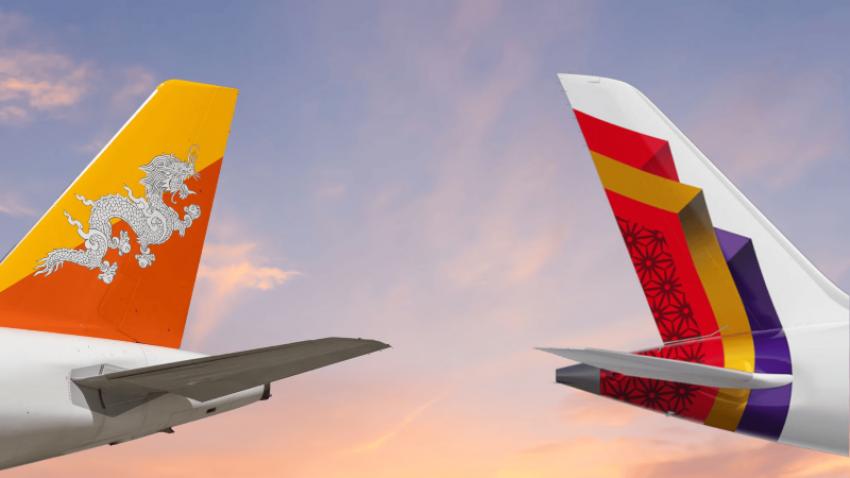
Air India and Drukair, Royal Bhutan Airlines, have entered into an interline partnership to enhance travel convenience and strengthen network connectivity between India, Bhutan, and destinations beyond.