
05 May 2017, 11:50 am

But, what really is shocking is that our law-makers and government bodies, who are in charge of knowing and enacting the laws, are not very well-versed either with the sea of Acts that the Indian constitution consists of.
Even more shocking is the fact that around 6,610 Acts were enacted under the British colonial hegemony.
Out of them, only a handful are being utilised by the various government sectors.
But, here is some comforting news.
Power Publishers’ newest release, 'The Act That Wasn’t', by Dr. Bobby George covers all the facets of various Acts that exist (especially in the healthcare industry) and how they can benefit us in all walks of life.
Writes the author in the Preface, “I have been deeply concerned with the erosion of social values, and the dominance of anti-social, unethical market forces in the field of health sciences."
He added that he has not only included certain suggested improvements in the healthcare sector that can be brought in through the implementation of several mentioned acts but also drawn comparisons between India Acts and those existing in developed societies to ensure future scopes of improvements.
We are hoping that readers will not only be enlightened about the various kinds of lawlessness existing in society but also define for themselves a more responsible path for widespread well-being.
Beside imparting essential knowledge, the book also praises the present central governing body for retrieving 1,741 Acts and working on their effective enactment in liaison with the present social and economic scenario of India.
Also, India might be lagging quite behind in the arena when compared to its Western counterparts, the rise isn’t very steep for us and there is definitely immense scope of improvement.
Priced at Rs 345, this book might just be the perfect healthcare law guidebook you might want to keep for safety reasons.
Grab your copy from power-publishers.com, ebay.in, flipkart.com and snapdeal.com.
(Reviewed by Anupriya Dutta)
- Project Prayas: Taj Hotels, Prabha Khaitan Foundation turn hospitality floors into learning spaces for young adults with special needs
- Sona College of Technology Fashion Technology students win Ministry of Textiles' Design Innovation Hackathon
- Reliance Industries posts record quarterly revenue of ₹3.4 lakh crore, Jio IPO on the horizon
- Prabha Khaitan Foundation, French Embassy explore deeper Indo-French cultural collaboration
- World Music Day 2026 Concert Writes a New Chapter in Kolkata's Cultural Soul
- Big boost for UPI: India’s digital payment system expands to Cambodia
- India at Cannes 2026: Glitter on the Croisette, But Where Is the Cinema?
- Sona College announces admissions to BTech in Computer Science, IT, AI-ML & Data Science
- NEET-UG to shift to Computer-Based test mode from 2027, says Dharmendra Pradhan; experts welcome move
- Sona College of Technology launches ‘Sona ChipIN Centre’ with latest semiconductor EDA tools


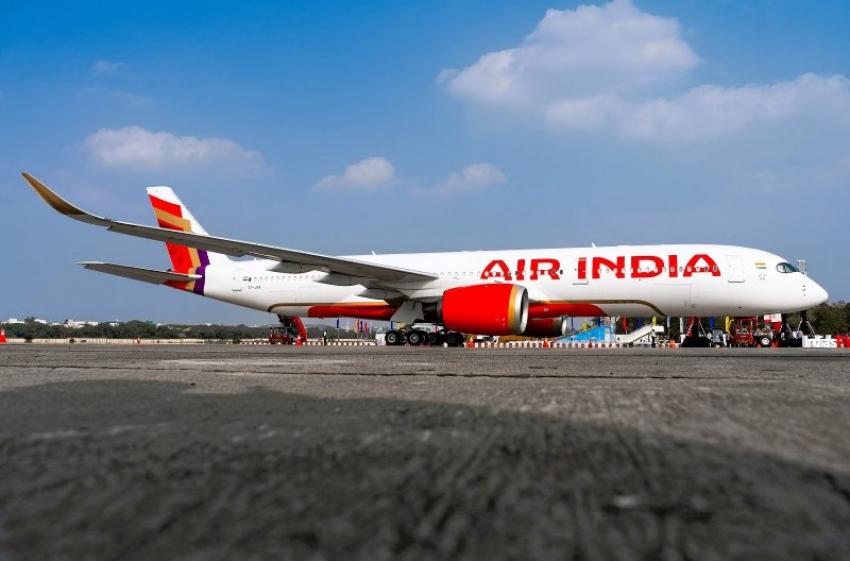
Tata Group-owned Air India and the Ministry of Tourism (MoT), Government of India, have signed a Memorandum of Understanding (MoU) to jointly promote India as a premier global tourism destination and strengthening India’s position as a key aviation and transit hub.
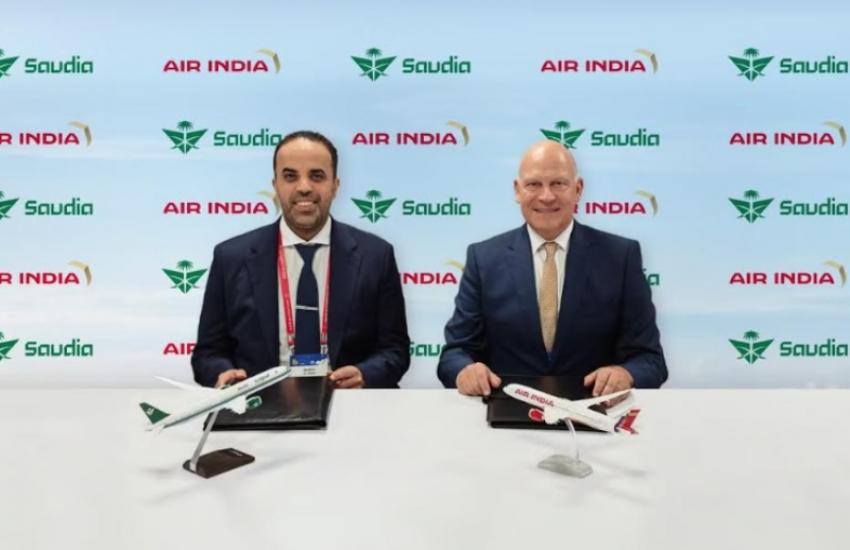
Tata-owned Air India, India’s leading global airline, and Saudia, the national flag carrier of Saudi Arabia, have signed a Memorandum of Understanding (MoU) to expand strategic cooperation between the two airlines.
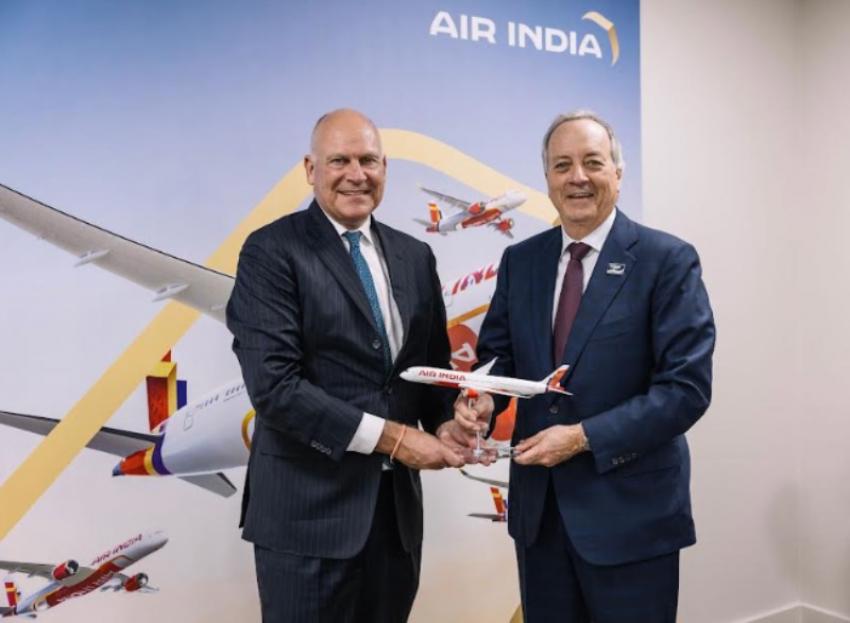
JFK Millennium Partners (JMP), the company selected by the Port Authority of New York & New Jersey to build and operate John F. Kennedy International Airport’s new world-class Terminal 6 (JFK T6), and Air India on Tueday announced that the airline has chosen T6 for its operations beginning in 2028.