
NITN | @notintownlive | 28 Aug 2017, 11:42 am
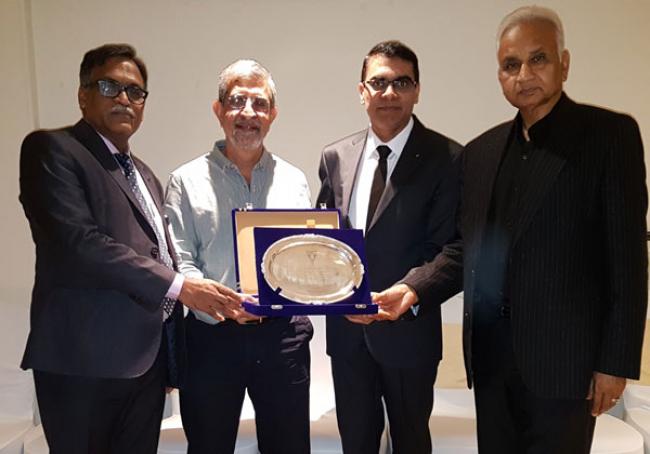
Eminent surgeons have urged India to improve its knowledge creation efforts especially in medicine relevant to its social, cultural and economic conditions.
New knowledge creation capabilities that take into account extremes of disease and economic disparities in India will significantly improve patient outcomes. And those creating the new knowledge will become role models for others, said Dr Mahendra Bhandari, Director of Robotic Surgery Research & Education, Vattikuti Urology Institute, Henry Ford Health System, Detroit, while addressing surgeons at Mumbai.
“The differentiator between a good surgeon and others is the quality of outcomes,” said Bhandari, who has a distinguished career in surgery spanning over 50 years.
Surgeons achieve new breakthroughs in patient outcomes by creating their own benchmarks relevant to the community of patients they serve and not by simply adhering to the existing benchmark elsewhere. “When peers adopt technology created by you, it is an evidence of your knowledge as a professional,” he said.
Patients do not choose surgeons with 99 per cent success rate but those having zero tolerance for errors, Bhandari said, while providing tips for achieving excellence in the field of surgery.
The medical community in India has a bigger and more critical role in treating patients as patients coming from diverse literacy levels here place ‘blind faith’ in doctors despite following a ‘shared decision making’ process in deciding line of treatment.
He cited examples of several committed Indian surgeons who worked towards extending the boundaries of robotic surgery to enhance quality of outcomes. Due to their efforts a surgical robot created by US-based Intuitive Surgical Inc. in 2000 to augment human cognition to perform surgeries led to better outcomes and is today used for procedures in Urology, Gynaecology, Thoracic, Gastrointestinal, and Head & Neck area.
Many Indian surgeons like Dr Mani Menon, Dr Rajesh Ahlawat and Dr Pranjal Modi have created new techniques in renal transplant procedures in complex surgeries using a da Vinci surgical robot even though the robot makers Intuitive Surgical Inc. originally thought a surgical robot would be used for cardiac surgeries.
Speaking to surgeons at a Vattikuti Foundation event to felicitate Dr TB Yuvaraja, Uro-Oncologist and Head of Robotic Surgery at Kokilaben Dhirubhai Ambani Hospital (KDAH), Mumbai for doing 1001 robotic surgeries, Dr Bhandari said that what makes the medical community proud is the intelligent manner in which Dr Yuvaraja used his experience to deliver superior patient outcomes. He also lauded how Dr Yuvaraja mentored his team of surgeons to better themselves and wholeheartedly disseminated knowledge with the medical community.
Eminent surgeons Dr M Vijaya Kumar, Vice Chancellor, Yenepoya (Medical) University and Dr Percy Chibber, Senior Urologist, Jaslok Hospital and Dr Santosh Shetty, COO, KDAH joined in felicitating Dr Yuvaraja for achieving this landmark.
Dr TB Yuvaraja who specializes in Robotic Uro-Oncology Surgeries, treating Prostate, Kidney, Urinary Bladder, Testicular and Penile cancers is known for devising suspension stitch to improve post prostatectomy incontinence and standardising procedure for Inquinal lymph node dissection.
Dr Yuvaraja has won several fellowships including the Memorial Sloan Kettering Cancer Centre (MSKCC), New York, USA among others.
Dr Bhandari who also serves as the CEO of Vattikuti Foundation, a US-based non-profit organisation that promotes robotic surgeries across the world, including India, said the Foundation is committed to training 500 robotic surgeons by 2020, in addition to offering 100 paid one year fellowships.
A series of international fellowships, Webinars, and Vattikuti Student fellowship at the bi-annual Robotic Surgeons Conference hosted by the foundation have played a significant role in the spread of multi-disciplinary robotic surgery practice.
There are now 275 trained robotic surgeons in the country with access to 51 Surgical Robots across 47 hospitals in India.
- Sona College of Technology's 25th graduation day: 1,325 students receive BE, BTech, ME, MCA, MBA and PhD degrees
- ‘We are the worst storytellers’: Suhel Seth on India’s failure to market itself at 'Kitaab' book launch
- Sona College of Technology welcomes 2,400 freshers to UG, PG programmes
- ‘Children shouldn’t carry the burden’: Social activist Sundeep Bhutoria urges Centre to enforce 10% school bag rule
- When the Body Becomes a Temple: The Ramnami Samaj's Century-Old Rebellion Now Inspires Kolkata's Durga Puja
- From Ramnami tattoos to a global app: Chaltabagan's 'Nishan' takes Durga Puja beyond Kolkata
- 66th Graduation Day: Thiagarajar Polytechnic records 100% placement for graduating batch of 692 across 11 disciplines
- 66th Graduation Day: Thiagarajar Polytechnic records 100% placement for graduating batch of 692 across 11 disciplines
- Three outstanding PhD scholars to receive Rs 1 lakh a year for three years from Valliappa Foundation
- Chaltabagan Durga Puja 2026: Khuti Puja marks new beginning amid Bengal’s political change
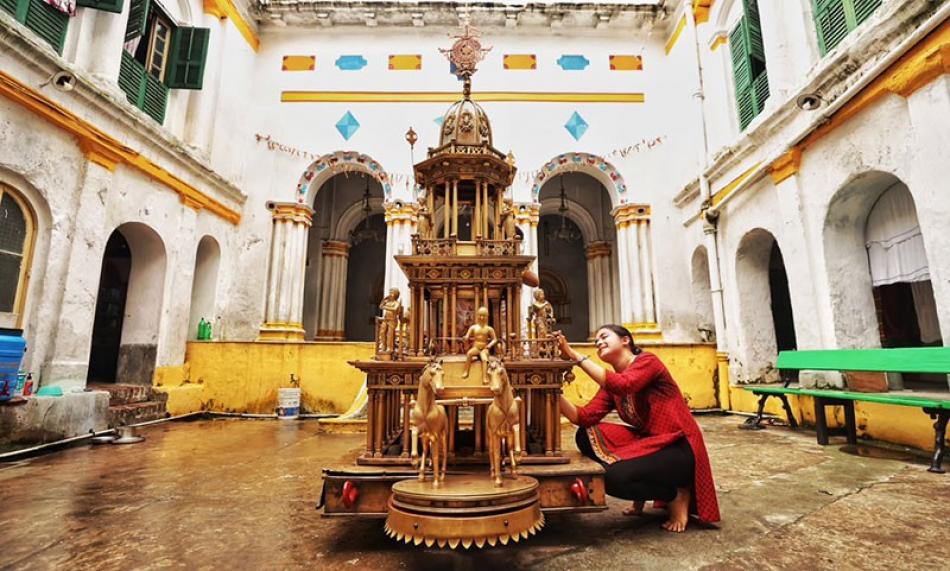


IndiGo has announced a new daily nonstop service between Mumbai and Hanoi, beginning October 25, 2026. The new route will expand the airline’s international network and improve connectivity with Vietnam’s capital, giving passengers more options and flexibility for travel between India and Vietnam.
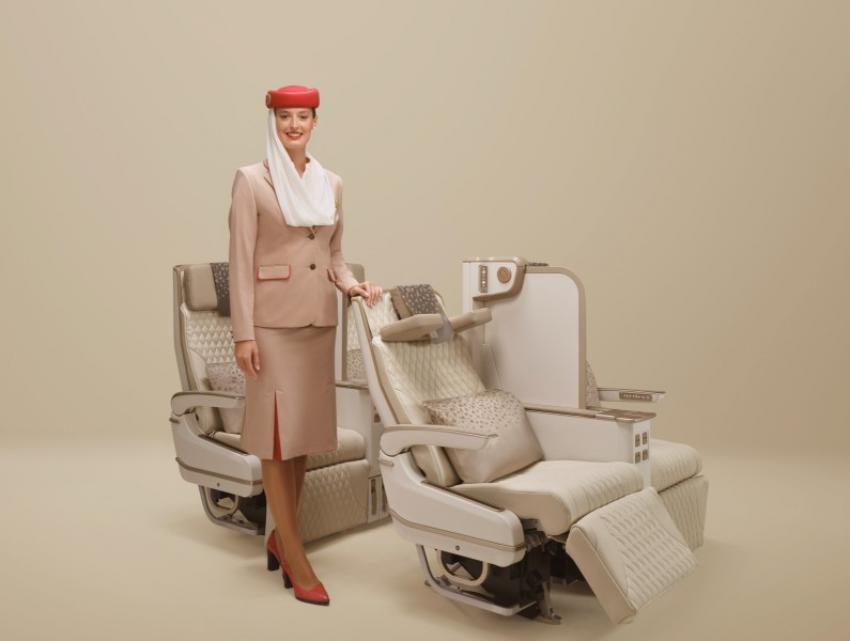
Aviation major Emirates is taking its award-winning Premium Economy experience a step further with the launch of what it describes as the world’s first electrically powered Premium Economy seat, featuring a full-height adjustable privacy screen between every seat.
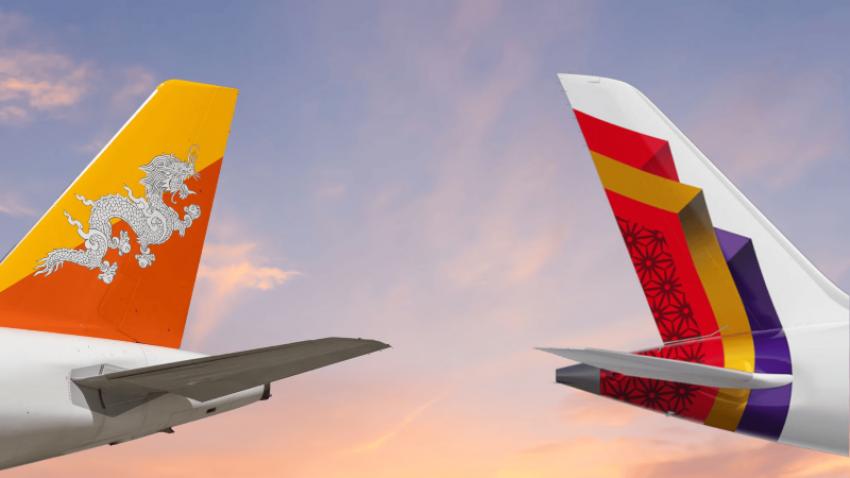
Air India and Drukair, Royal Bhutan Airlines, have entered into an interline partnership to enhance travel convenience and strengthen network connectivity between India, Bhutan, and destinations beyond.