
NITN | @notintownlive | 10 Aug 2018, 11:57 am
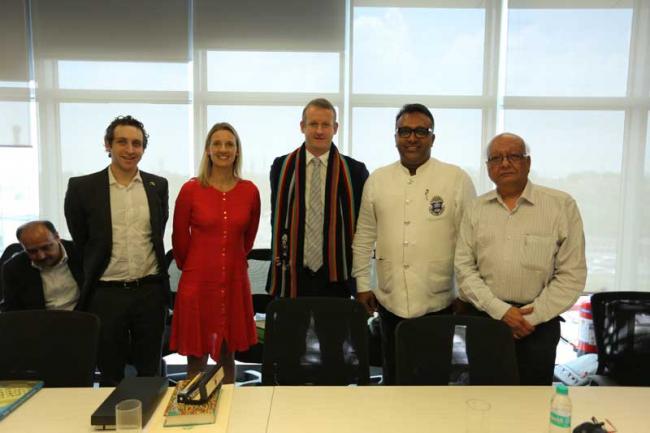
New Delhi, Aug 10 (NITN): Education, particularly higher education, has an important role to play in helping create a just society, and Australia and India through their strong collaboration in the field of education can help in strengthening democracy and overcoming the challenges faced in creating a balanced, equitable society, prominent speakers said here on Thursday.
Participating in a discussion on ‘Role of Education in Creating a Just Society’, Mr Rod Hilton, Deputy High Commissioner Australian High Commission, Dr. C Raj Kumar, Founding Vice Chancellor O.P. Jindal Global University, and Dr. Gabrielle Appleby, Associate Professor School of Law at the University of New South Wales (UNSW), Sydney, stressed on the strong relationship between higher education and the creation of a just society.
Hilton, who was moderating the discussion held at UNSW’s new office in New Delhi that was established to attract more students from India, said the new ‘India Economic Strategy to 2035' report released by the Australian government focuses on the strong cooperation in the education sector between the two countries as one of the major pillars of their strategic partnership.
“Education is the flagship sector outlined in the report,” Hilton said, adding that there are 68,000 Indian students in Australia and the figure was growing in double-digit numbers in the last few years.
The cooperation in the education sector was not just in student enrolments but also in research collaboration, partnerships between educational institutions, drawing up of curricula, courses, knowledge discourses, Hilton said, adding that education was one of the strongest pillars of people-to-people linkages between Australia and India.
Dr Raj Kumar said that education, and higher education, helps in developing informed and enlightened citizenry and strengthens democracy. He pointed out that education has a meaningful role to play in preventing India’s large youthful populace from slipping into “vulnerabilities” by creating “greater resilience” in society.
He said “the relation between education and employment has been over emphasized”, and there needs to be focus on the role of education in strengthening democracy and empowerment.
Gabrielle Appleby said the UNSW Law School focuses on helping in creation of a just society with encouraging students and faculty to have “a questioning mind and the power of questioning”.
Through the art of analyzing and challenging assumptions, like the role of judges and judicial appointments, the UNSW Law School encourages students into critical thinking, which is aimed towards creation of a just society, she said.
Appleby cited the Australian Feminist Judgments Project, through which women activists are asked to re-write judgments with a feminist outcome. In another move towards creating a just society, the UNSW Law School has started a legal clinic where the students have to help in providing legal services to the underprivileged.
Amit Dasgupta, UNSW's India Country Director, said that UNSW Sydney and OP Jindal Global University have entered into an agreement between their two schools of business. He said UNSW stresses on the twin pillars of education and research as a means to make a difference to people’s lives.
He also spoke about the UNSW’s Knowledge Exchange Discussion Forum that provides a platform to different stakeholders to share thoughts and brainstorm design solutions to development challenges.
About University of New South Wales (UNSW)
UNSW, Australia’s global university ranked among the top 50 Universities in the world offers programs in engineering, business, law, architecture, art and design, medicine and science.
Located in Sydney, a safe and student friendly city, UNSW is home to more than 52,000 students from nearly 130 countries. UNSW has been attracting a growing number of bright Indian students for undergraduate and post graduate studies.
As one of the world's leading research and teaching universities UNSW's cutting edge research and innovation facilitated by 3000 faculty is known for acceptance and successful commercialisation.
- Manicktala Chaltabagan Lohapatty Durga Puja Committee wins numerous Awards as ‘Nishan’ theme captures hearts
- Bengal Guv R. N. Ravi inaugurates Chaltabagan Lohapatty Durga Puja’s 84th edition ‘Nishan — The Mark’
- Sundeep Bhutoria brings Bengal’s Mahalaya to the nation in Hindi – Mahishasur Mardini ki Gatha
- VeeCycle Works Signs MoU with AP Govt for Rs 150 Cr Recycling Project in Visakhapatnam
- Kolkata culturist Sundeep Bhutoria inaugurates India National Stand at Frankfurt Book Fair 2026
- Where governments stop, institutions begin: Culture Minister Shekhawat salutes Prabha Khaitan Foundation
- National Award-winning ‘Ramnami’ puts spotlight on community behind Chaltabagan’s ‘Nishan’ theme
- Thiagarajar Polytechnic College receives Education Excellence Award for the fifth time
- Sona College of Technology's 25th graduation day: 1,325 students receive BE, BTech, ME, MCA, MBA and PhD degrees
- ‘We are the worst storytellers’: Suhel Seth on India’s failure to market itself at 'Kitaab' book launch



Air India will launch non-stop flights between Delhi and Osaka’s Kansai International Airport on 2 February 2027, becoming the only airline to operate on the route. The airline will run four flights a week between the Indian capital and Osaka, Japan’s second-largest metropolitan area, using Boeing 787-8 aircraft.
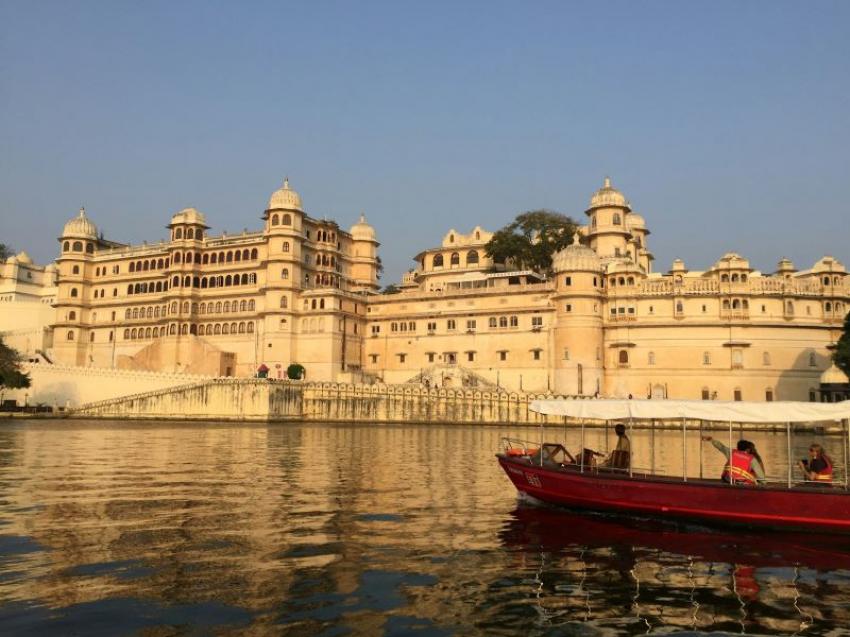
IndiGo will introduce daily non-stop flights to Udaipur from Noida International Airport and Navi Mumbai International Airport, starting October 25 and November 15, 2026 respectively.

Etihad Airways and Nigerian carrier Ibom Air have signed an interline agreement that will allow passengers travelling with Etihad to connect beyond Lagos and Accra to five cities in Nigeria on a single ticket.