
NITN | @notintownlive | 05 Mar 2019, 06:47 am
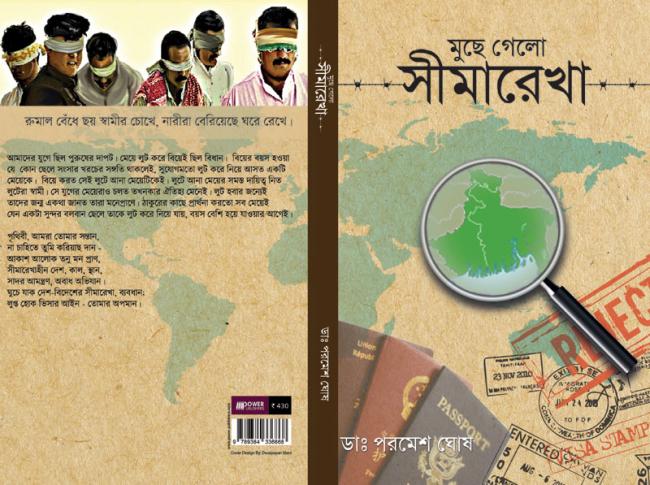
The world is a single place yet it is divided into so many parts with man-made borders and there is so much diversity all around.
Many restrictions and hindrances are present in this world and we actually do not know the ways to overcome it.
In his Bengali book Muchhe Gelo Seemarekha, Dr Parames Ghosh has pointed out the restrictions of borders between countries and he wants to omit all these things and make the world a one single place.
How are his views portrayed? Is it really possible to create this ideal state? Readers must read the book to find their own answers.
The book talks about the journey of a fictional character called Keeriti.
Keeriti is the author’s spokesperson who intends to make the world stand under one umbrella, with no boundaries, no differences and no religion to fight for.
If we look at it critically, we will find that boundaries are present everywhere and in our day to day lives.
There is a boundary between the home and the world, a barrier in the choices between two people and so on.
So, if we do not take into consideration the border lines at the larger perspective, inner boundaries will still continue to exist.
In one of the chapters, the author has discussed about the importance of passport and visa while travelling across the world.
When our freedom is taken away due to various reasons, some people may ask themselves, if countries and religion did not exist to widen our differences, how would the entire scenario look like?
It would definitely have been a great place to live in because we all crave for freedom.
However, the book ends on a different note, which is more personal, and the readers have to read it in order to get the actual essence.
Each chapter talks about a new thing, a new story but somewhere it is interrelated.
The book deals with a theme that is new in its own way, hence it must appeal to a wide range of readers.
- Project Prayas: Taj Hotels, Prabha Khaitan Foundation turn hospitality floors into learning spaces for young adults with special needs
- Sona College of Technology Fashion Technology students win Ministry of Textiles' Design Innovation Hackathon
- Reliance Industries posts record quarterly revenue of ₹3.4 lakh crore, Jio IPO on the horizon
- Prabha Khaitan Foundation, French Embassy explore deeper Indo-French cultural collaboration
- World Music Day 2026 Concert Writes a New Chapter in Kolkata's Cultural Soul
- Big boost for UPI: India’s digital payment system expands to Cambodia
- India at Cannes 2026: Glitter on the Croisette, But Where Is the Cinema?
- Sona College announces admissions to BTech in Computer Science, IT, AI-ML & Data Science
- NEET-UG to shift to Computer-Based test mode from 2027, says Dharmendra Pradhan; experts welcome move
- Sona College of Technology launches ‘Sona ChipIN Centre’ with latest semiconductor EDA tools


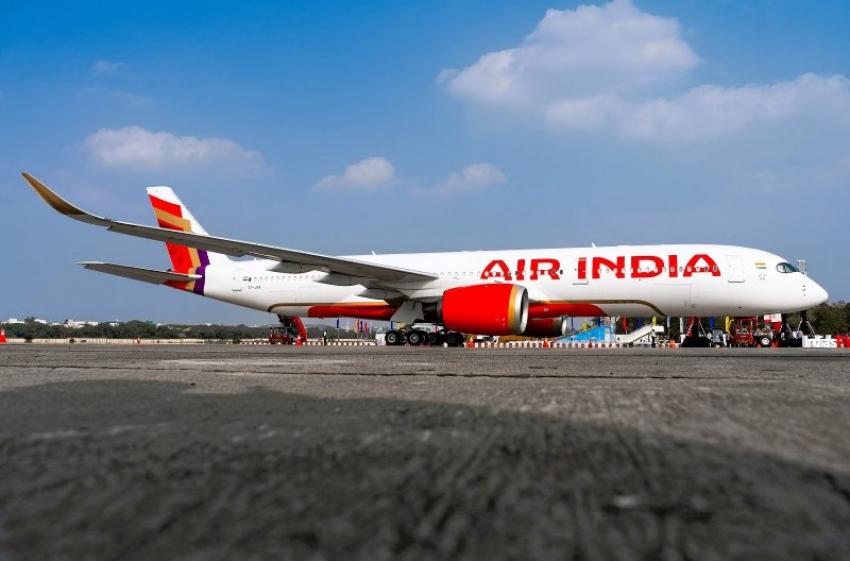
Tata Group-owned Air India and the Ministry of Tourism (MoT), Government of India, have signed a Memorandum of Understanding (MoU) to jointly promote India as a premier global tourism destination and strengthening India’s position as a key aviation and transit hub.
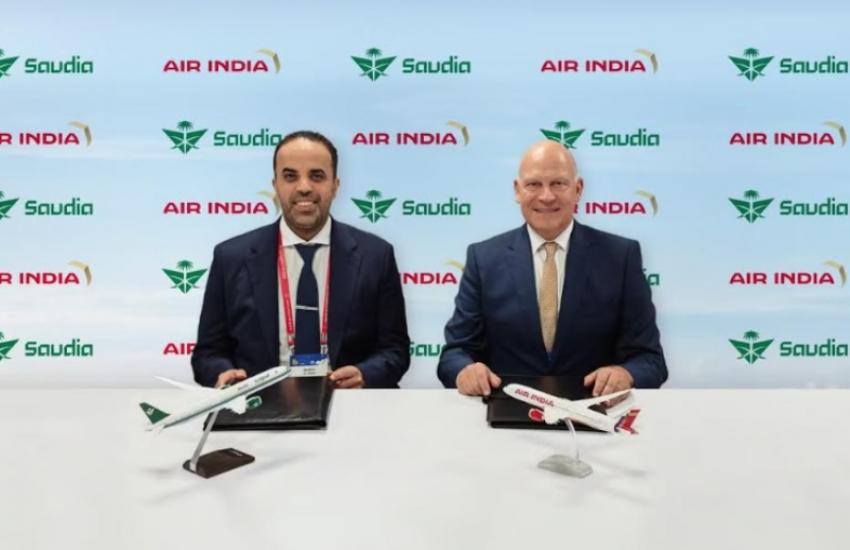
Tata-owned Air India, India’s leading global airline, and Saudia, the national flag carrier of Saudi Arabia, have signed a Memorandum of Understanding (MoU) to expand strategic cooperation between the two airlines.
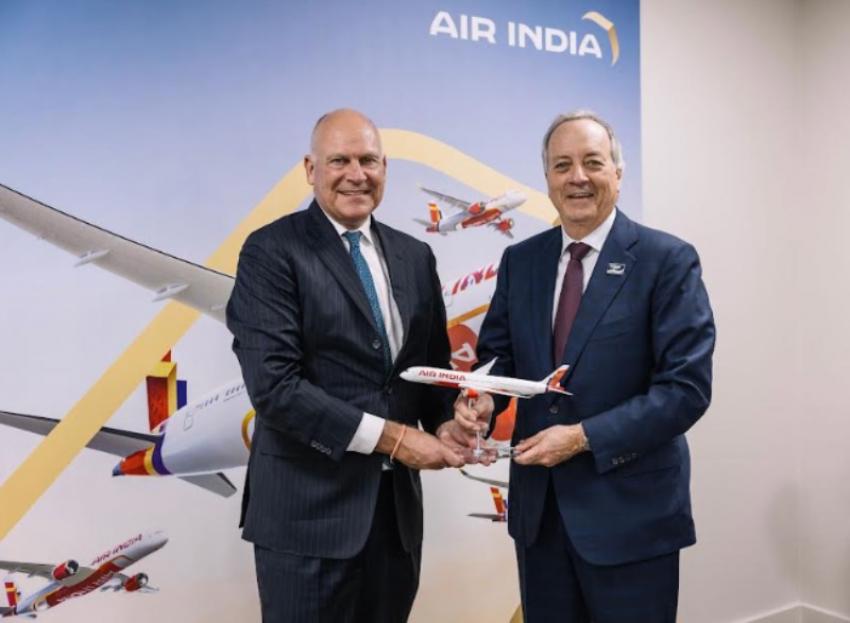
JFK Millennium Partners (JMP), the company selected by the Port Authority of New York & New Jersey to build and operate John F. Kennedy International Airport’s new world-class Terminal 6 (JFK T6), and Air India on Tueday announced that the airline has chosen T6 for its operations beginning in 2028.