
11 Apr 2016, 05:47 pm

According to the study, planets with gaseous atmospheres that lie very close to their host stars are bombarded by a torrent of high-energy radiation. Due to their proximity to the star, the heat that the planets suffer means that their 'envelopes' have been blown away by intense radiation. This violent 'stripping' occurs in planets that are made up of a rocky core with a gaseous outer layer.
The scientists used asteroseismology to characterize the stars and their planets to levels of accuracy not achieved before for these systems. Asteroseismology uses the natural resonances of stars to reveal their properties and inner structures.
The results of the study have important implications for understanding how stellar systems, like our own solar system, and their planets, evolve over time and the crucial role played by the host star.
Guy Davies, from the University of Birmingham's School of Physics and Astronomy, said, "For these planets it is like standing next to a hairdryer turned up to its hottest setting. There has been much theoretical speculation that such planets might be stripped of their atmospheres. We now have the observational evidence to confirm this, which removes any lingering doubts over the theory."
Davies added, "Our results show that planets of a certain size that lie close to their stars are likely to have been much larger at the beginning of their lives. Those planets will have looked very different."
Scientists expect to discover and characterize many more of these 'stripped systems' using a new generation of satellites, including the NASA TESS Mission which will be launched next year.
Image: Peter Devine.
- Sona College of Technology's 25th graduation day: 1,325 students receive BE, BTech, ME, MCA, MBA and PhD degrees
- ‘We are the worst storytellers’: Suhel Seth on India’s failure to market itself at 'Kitaab' book launch
- Sona College of Technology welcomes 2,400 freshers to UG, PG programmes
- ‘Children shouldn’t carry the burden’: Social activist Sundeep Bhutoria urges Centre to enforce 10% school bag rule
- When the Body Becomes a Temple: The Ramnami Samaj's Century-Old Rebellion Now Inspires Kolkata's Durga Puja
- From Ramnami tattoos to a global app: Chaltabagan's 'Nishan' takes Durga Puja beyond Kolkata
- 66th Graduation Day: Thiagarajar Polytechnic records 100% placement for graduating batch of 692 across 11 disciplines
- 66th Graduation Day: Thiagarajar Polytechnic records 100% placement for graduating batch of 692 across 11 disciplines
- Three outstanding PhD scholars to receive Rs 1 lakh a year for three years from Valliappa Foundation
- Chaltabagan Durga Puja 2026: Khuti Puja marks new beginning amid Bengal’s political change



IndiGo has announced a new daily nonstop service between Mumbai and Hanoi, beginning October 25, 2026. The new route will expand the airline’s international network and improve connectivity with Vietnam’s capital, giving passengers more options and flexibility for travel between India and Vietnam.

Aviation major Emirates is taking its award-winning Premium Economy experience a step further with the launch of what it describes as the world’s first electrically powered Premium Economy seat, featuring a full-height adjustable privacy screen between every seat.
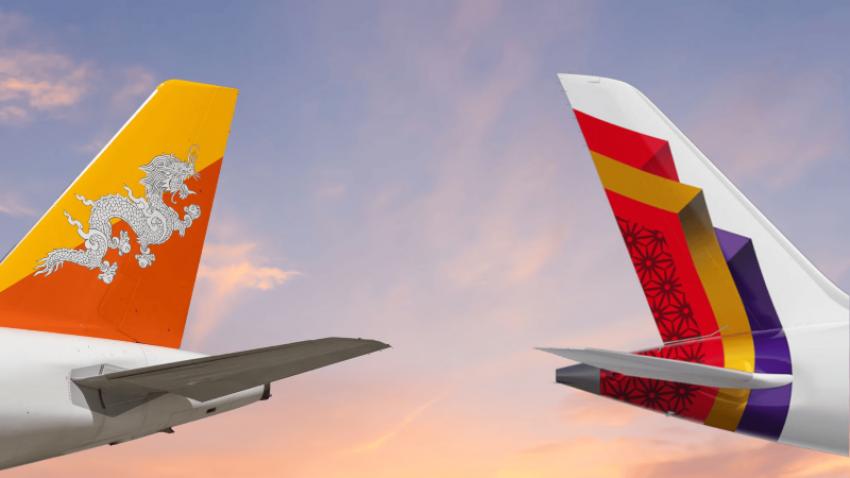
Air India and Drukair, Royal Bhutan Airlines, have entered into an interline partnership to enhance travel convenience and strengthen network connectivity between India, Bhutan, and destinations beyond.